Courtyard by Marriott Philadelphia Downtown
Category
Select Service
LocationPhiladelphia, PA
ServicesInteriors: Prototypical (Gettys One)
A Historic Landmark, Reframed for Modern Hospitality
Converting a historic building into a new hotel brand takes more than a fresh coat of paint. It requires understanding what should be preserved, what needs to evolve, and where design can create new value.
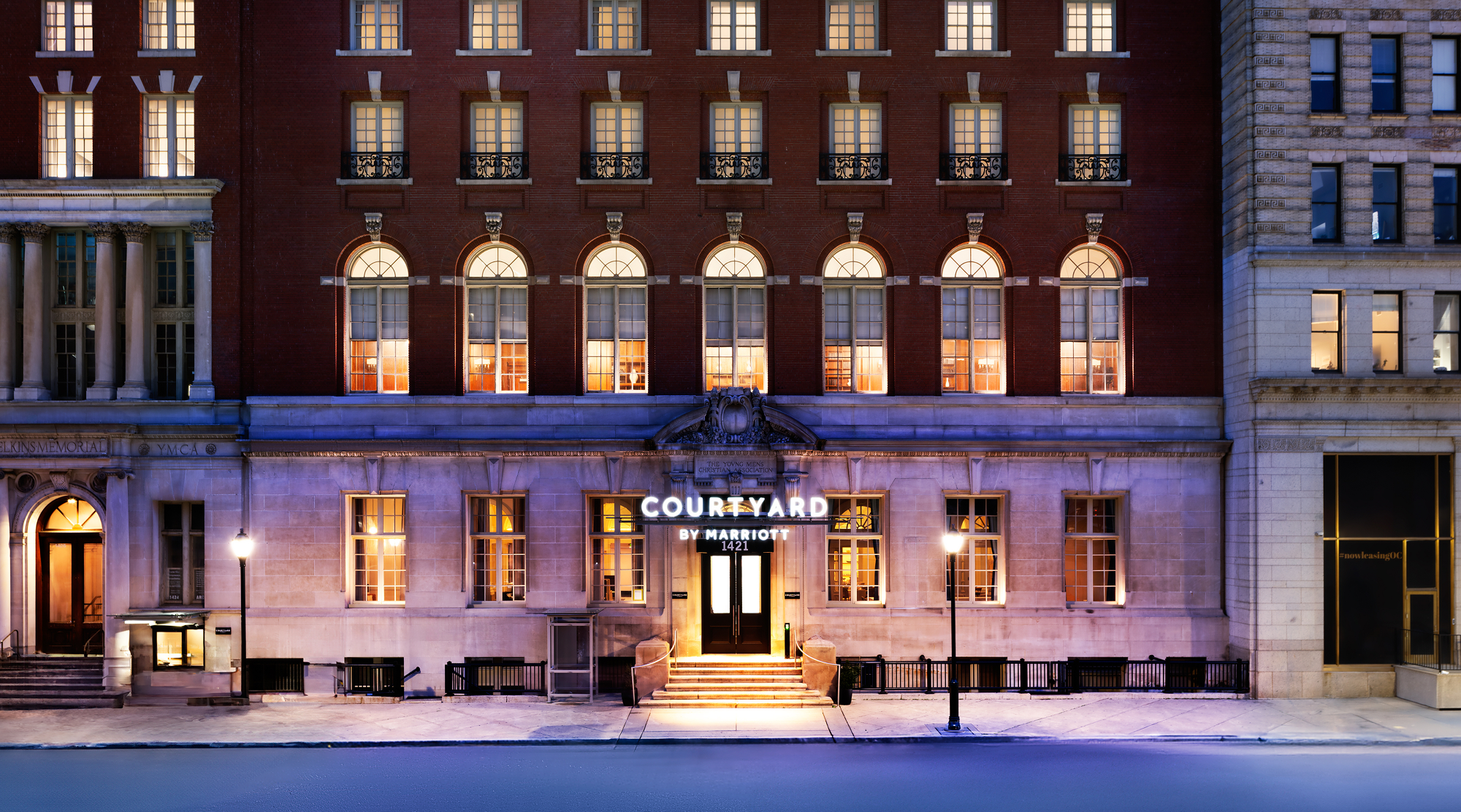
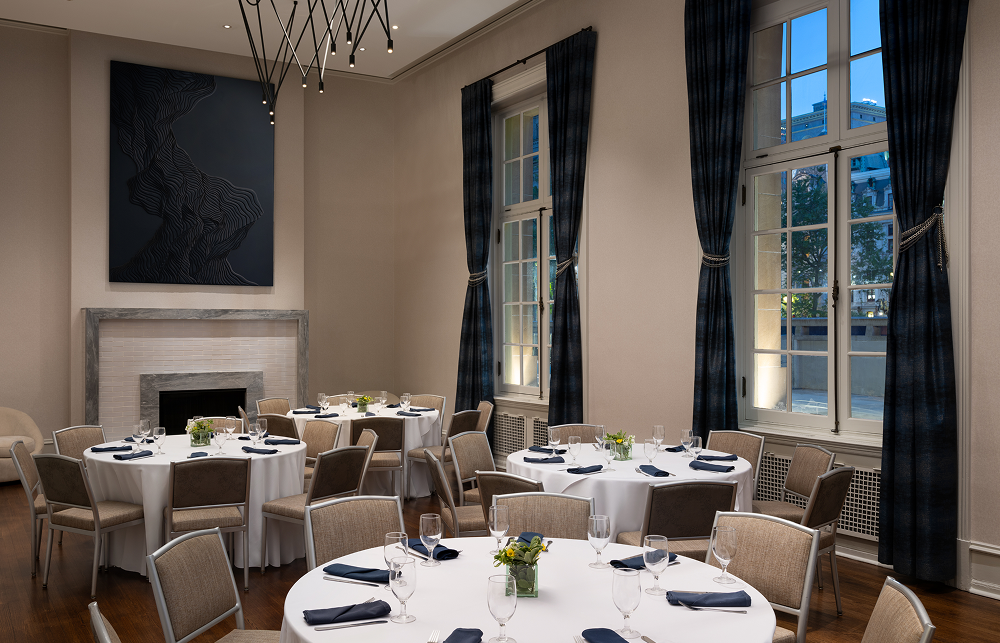
Courtyard Philadelphia Downtown occupies the former Le Méridien, a building originally constructed as a YMCA more than a century ago. Defined by Georgian Revival architecture, original woodwork, graceful archways, and a dramatic skylit atrium rising more than 75 feet. That kind of architecture doesn't bend easily to a standard hotel prototype, so we didn't try to force it.
Instead, we built the design around a kind of polished duality: historic character paired with a modern urban edge. The architecture became the foundation for a guest experience that feels like Philadelphia first, and Courtyard second, while still hitting every functional mark the brand requires.
Courtyard Philadelphia Downtown occupies the former Le Méridien, a building originally constructed as a YMCA more than a century ago. Defined by Georgian Revival architecture, original woodwork, graceful archways, and a dramatic skylit atrium rising more than 75 feet. That kind of architecture doesn't bend easily to a standard hotel prototype, so we didn't try to force it.
Instead, we built the design around a kind of polished duality: historic character paired with a modern urban edge. The architecture became the foundation for a guest experience that feels like Philadelphia first, and Courtyard second, while still hitting every functional mark the brand requires.
Adapting the Prototype to the Property
Adaptive reuse flips the usual design question. Instead of "how do we build to the standard," it's "how does the standard work inside a building that was never meant to hold it."For the guestrooms, we treated Courtyard's prototypical layouts as a starting point, not a mandate. Room configurations and specs were adjusted to work with the structural realities of a century-old concrete building, while keeping the comfort and functionality guests expect from the brand. That gave the property the efficiency of a prototype without ignoring what the building actually demanded.
Working With the Architecture, Not Around It
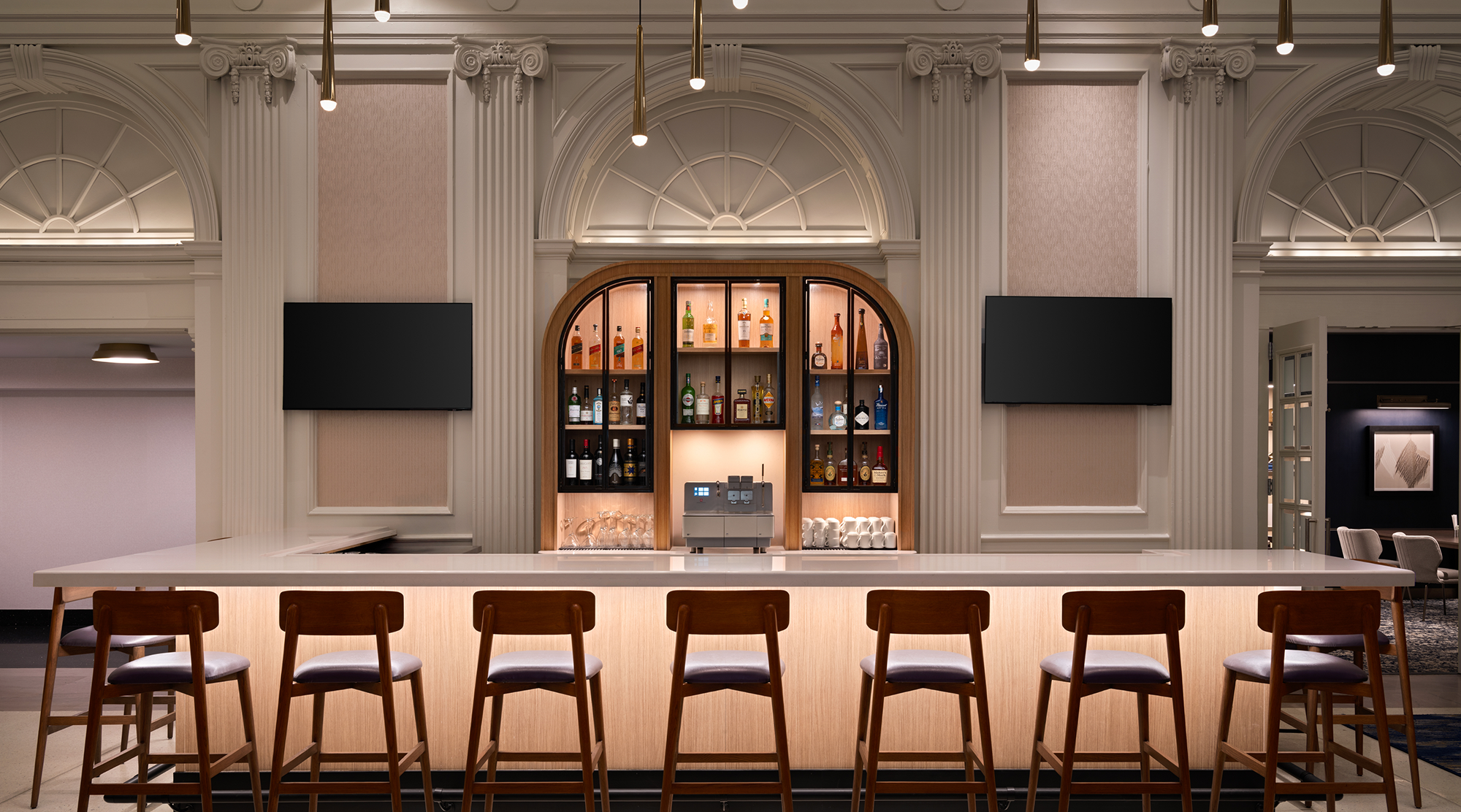
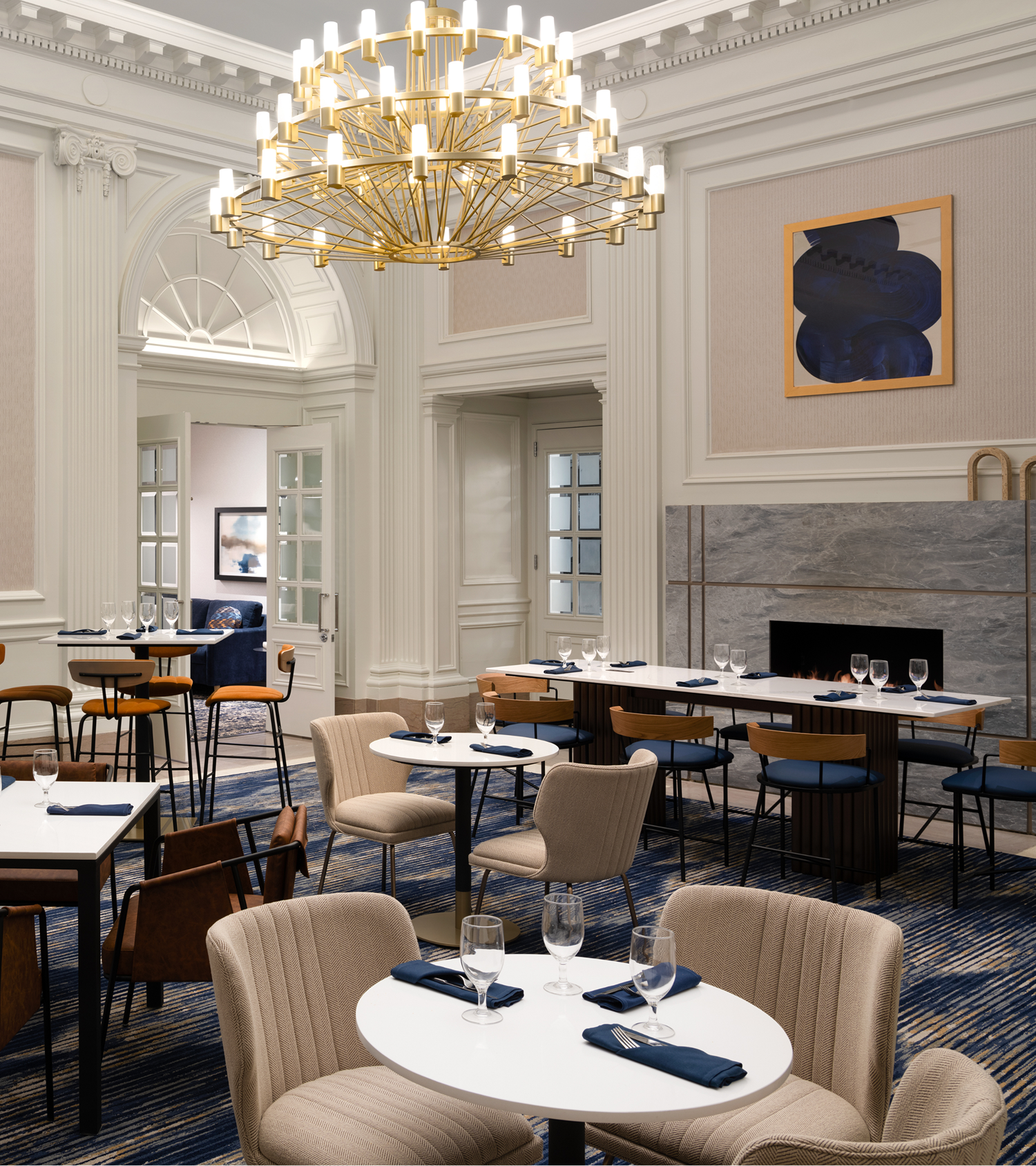
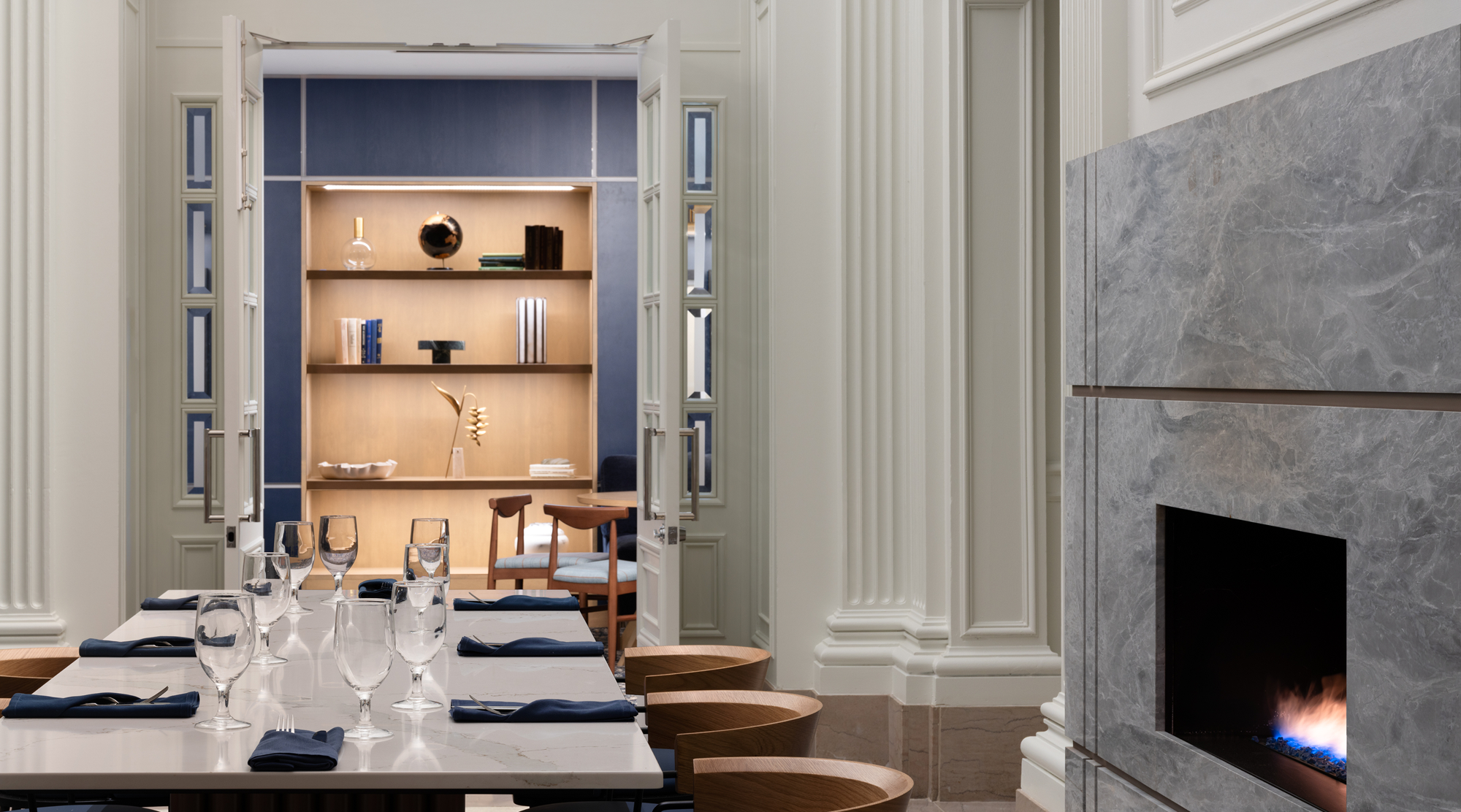
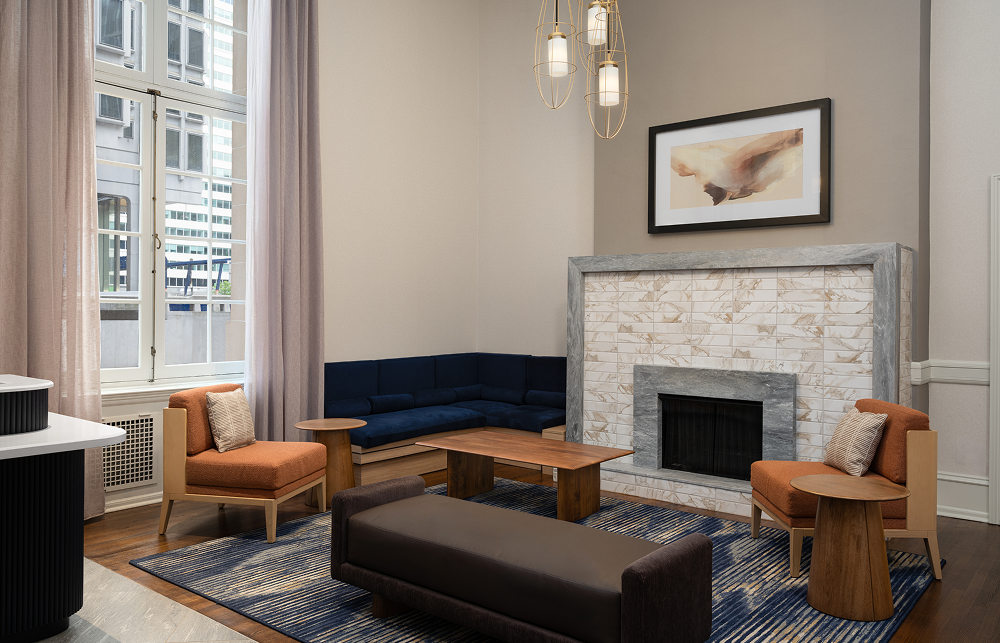
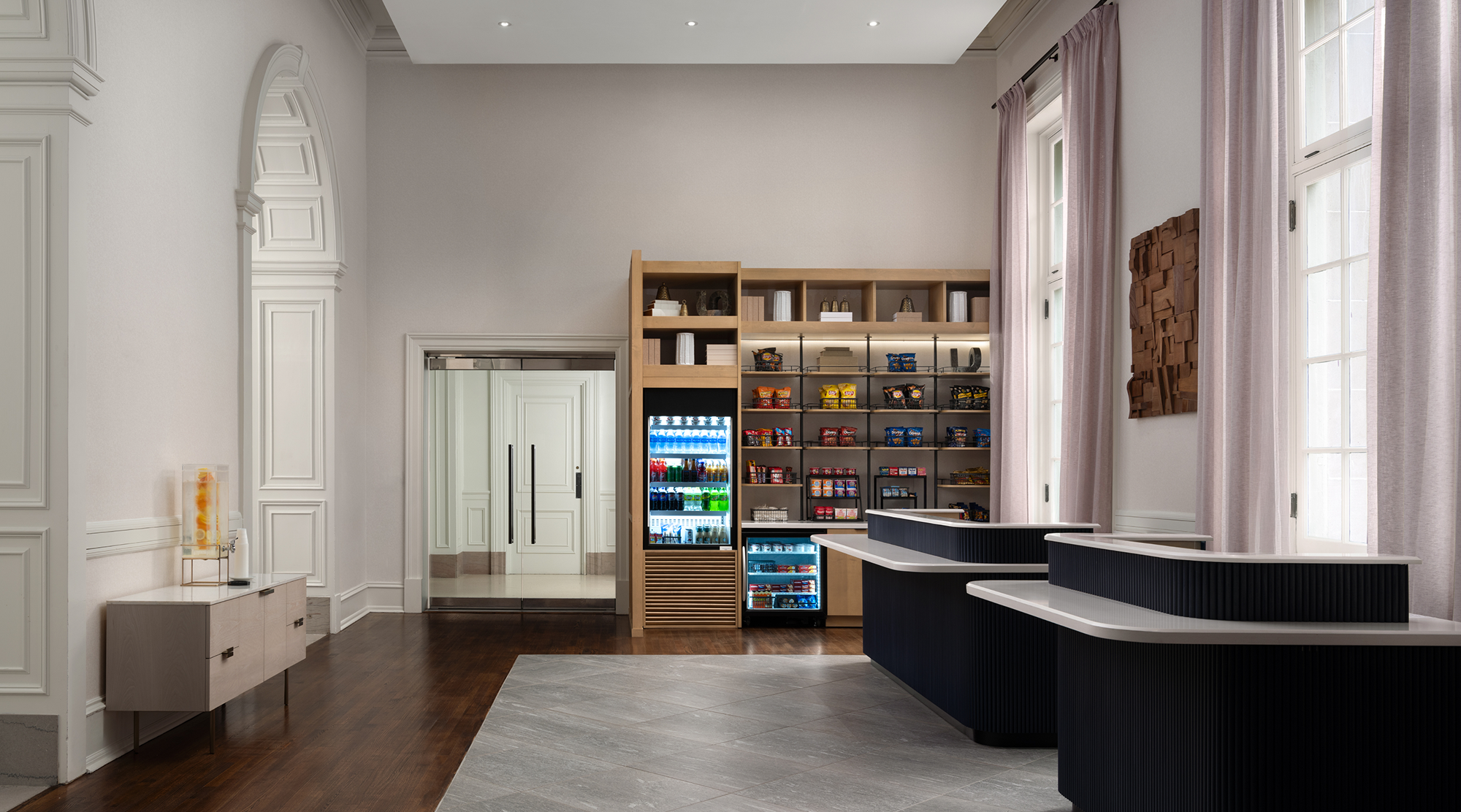
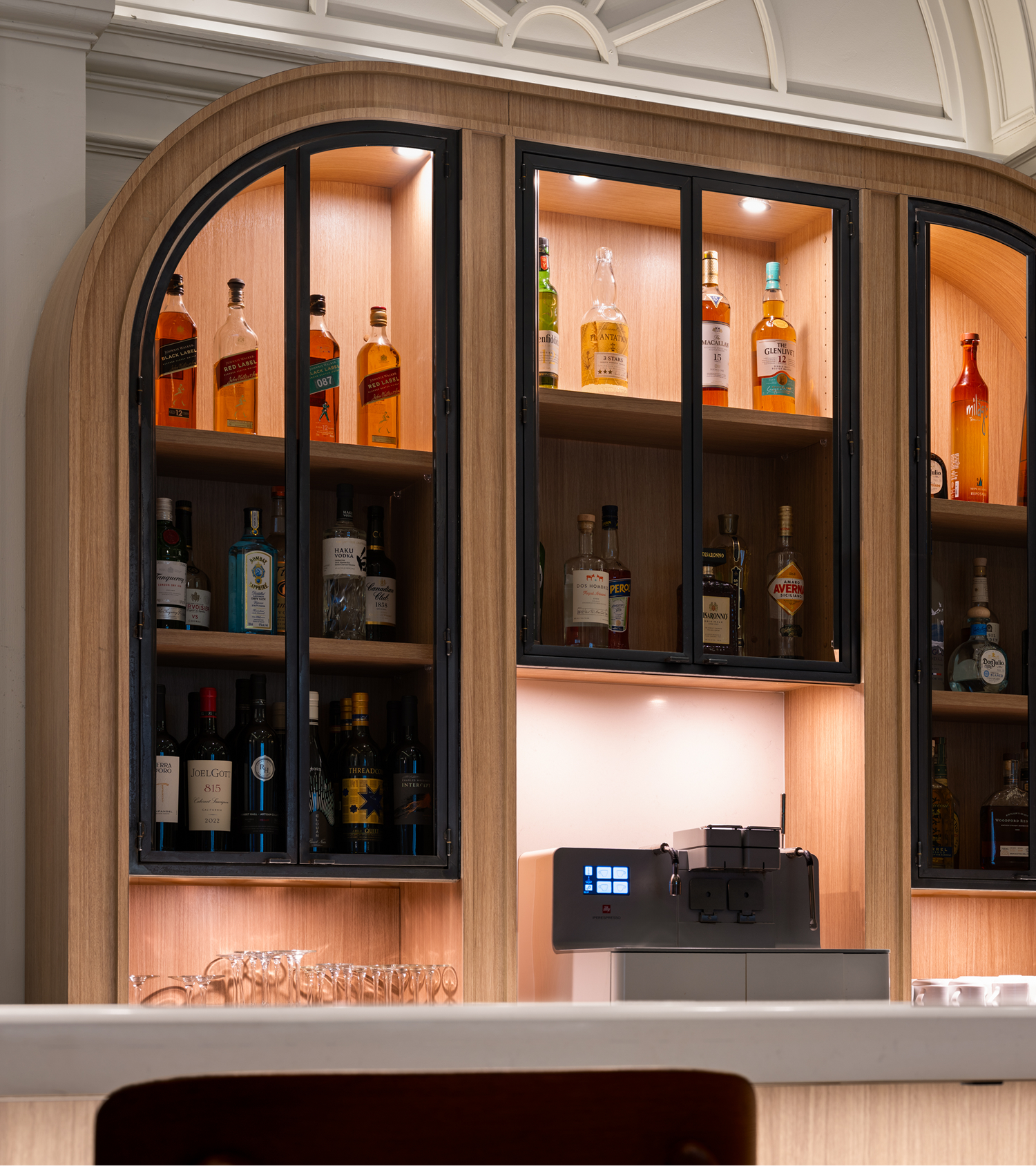
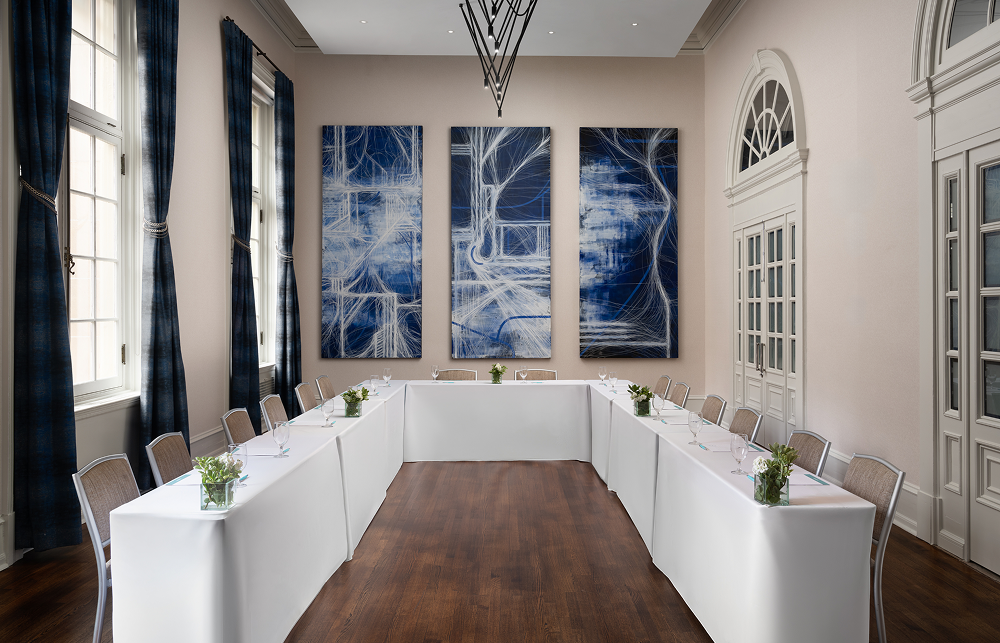
Throughout the public spaces, new interventions were intentionally layered against the building’s original architecture. Clean-lined millwork, tailored furnishings, contemporary lighting, warm woods, stone, brass accents, and reeded glass introduce a more current hospitality language without diminishing the character of the historic setting.
We also rethought the arrival sequence entirely. Rather than a traditional front desk, check-in is decentralized — more personal, less transactional. Custom millwork folds retail and amenities into the space while keeping sightlines open, so the architecture is still the first thing guests notice.
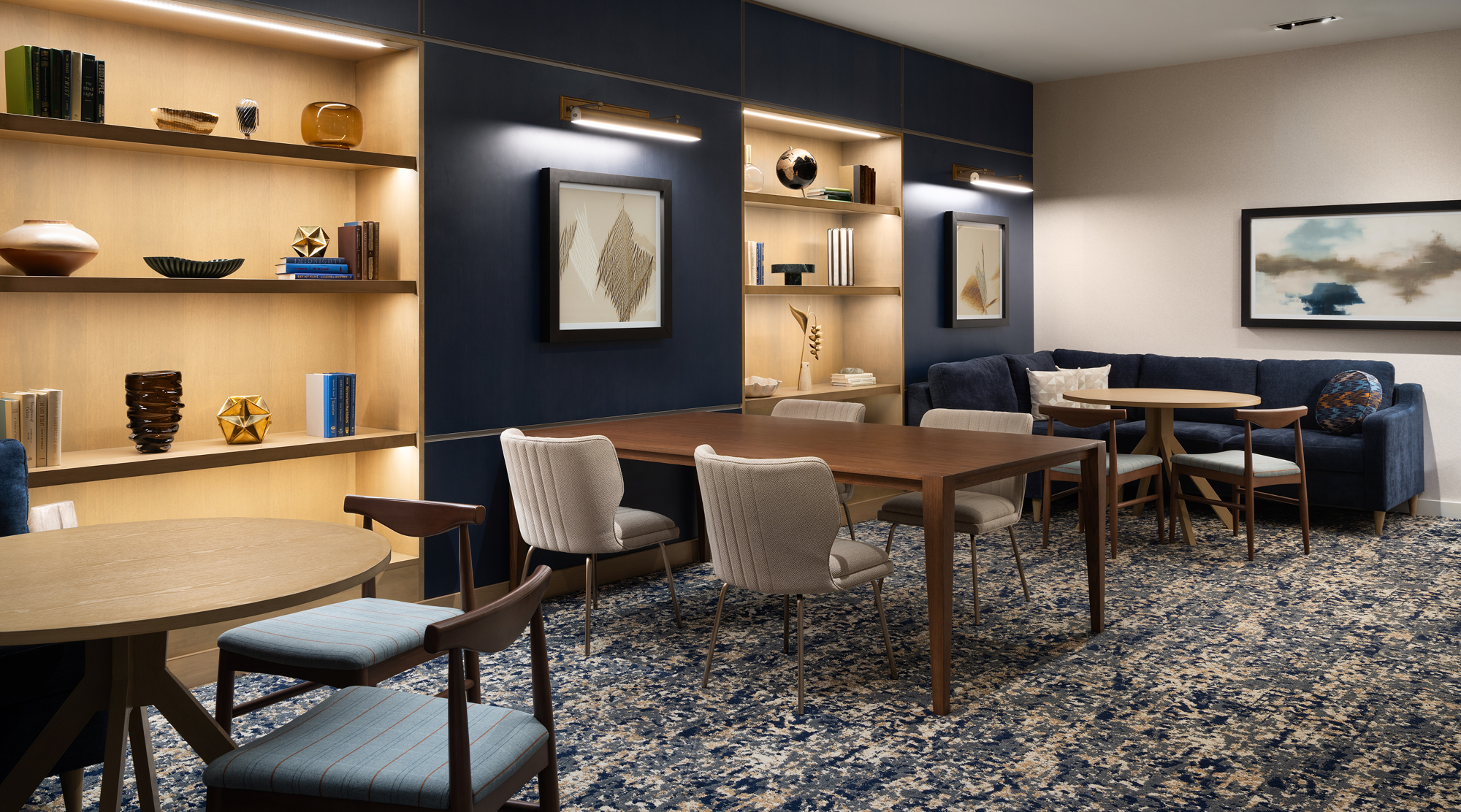
Beyond the entry, public spaces are organized into zones — arrival, work, dining, socializing, relaxation — giving guests real reasons to move through the hotel differently depending on the time of day.
Reactivating the Atrium
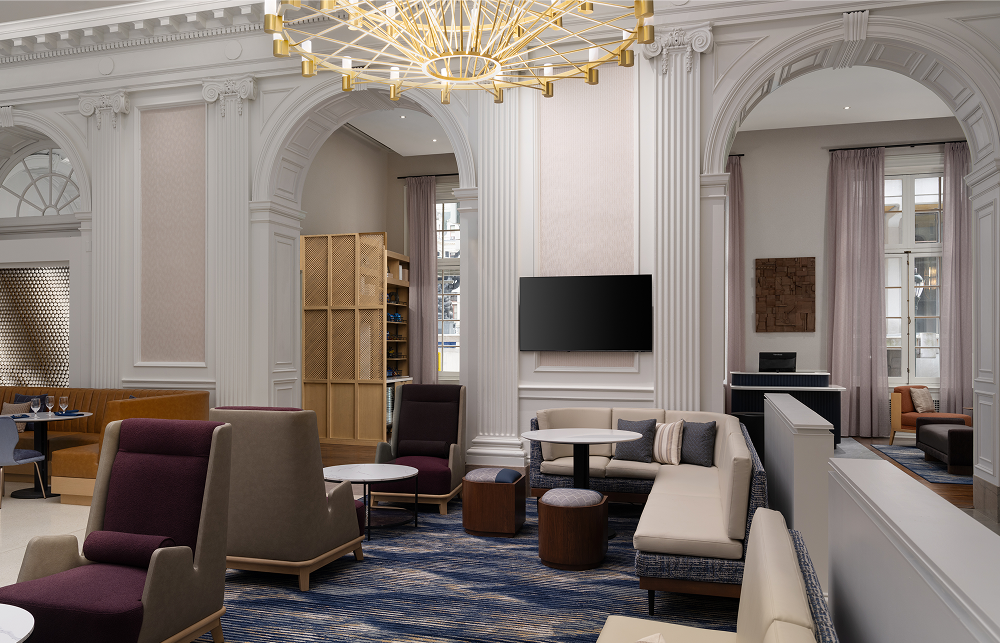
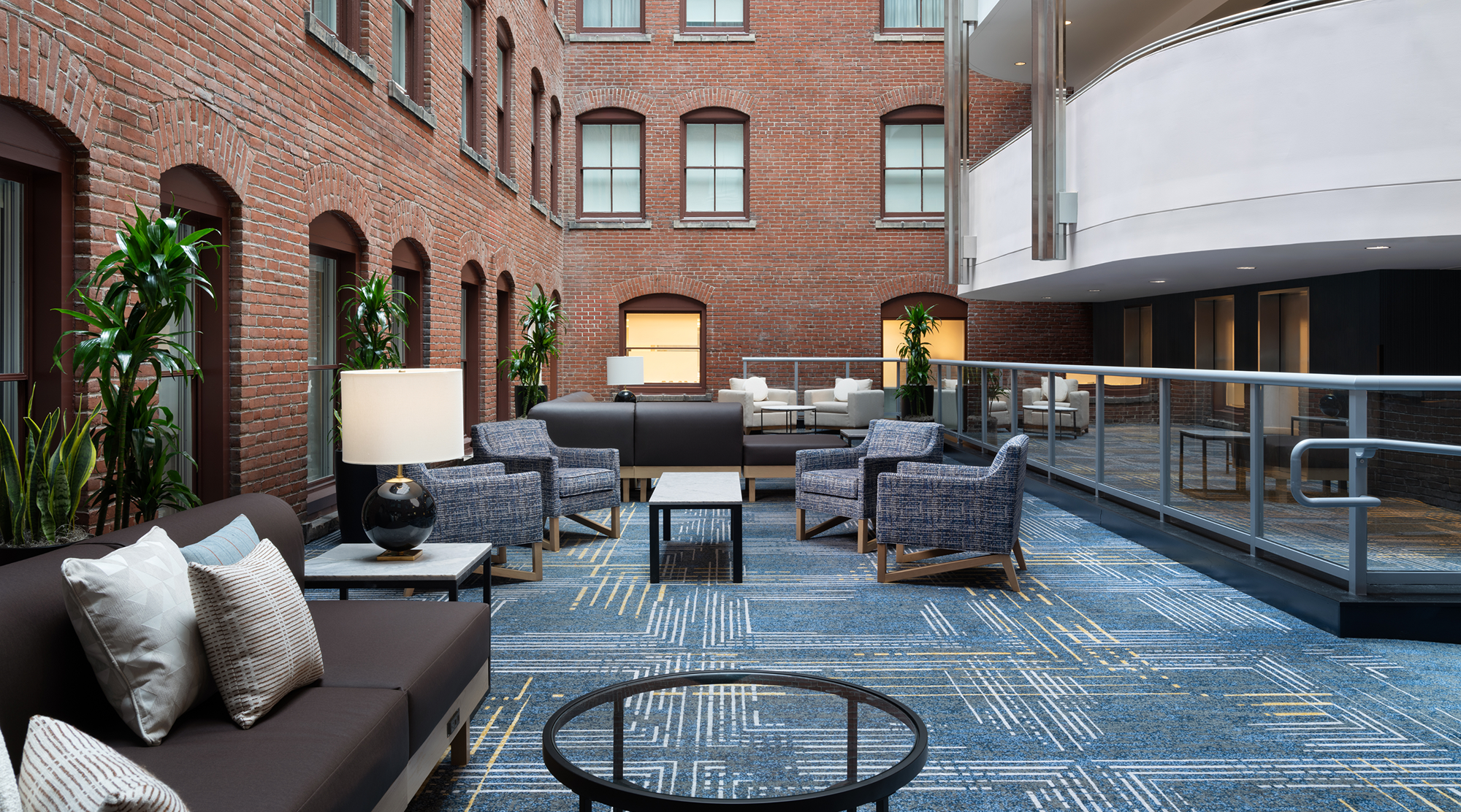
At the center of the property, the soaring historic atrium became one of the project’s greatest opportunities.Rather than treating the existing volume as simply an architectural artifact, the design activates it as part of the contemporary guest experience. Layered seating, communal areas, integrated power, greenery, and ambient lighting introduce new reasons to occupy the space, while the original skylight brings changing natural light into the experience throughout the day.
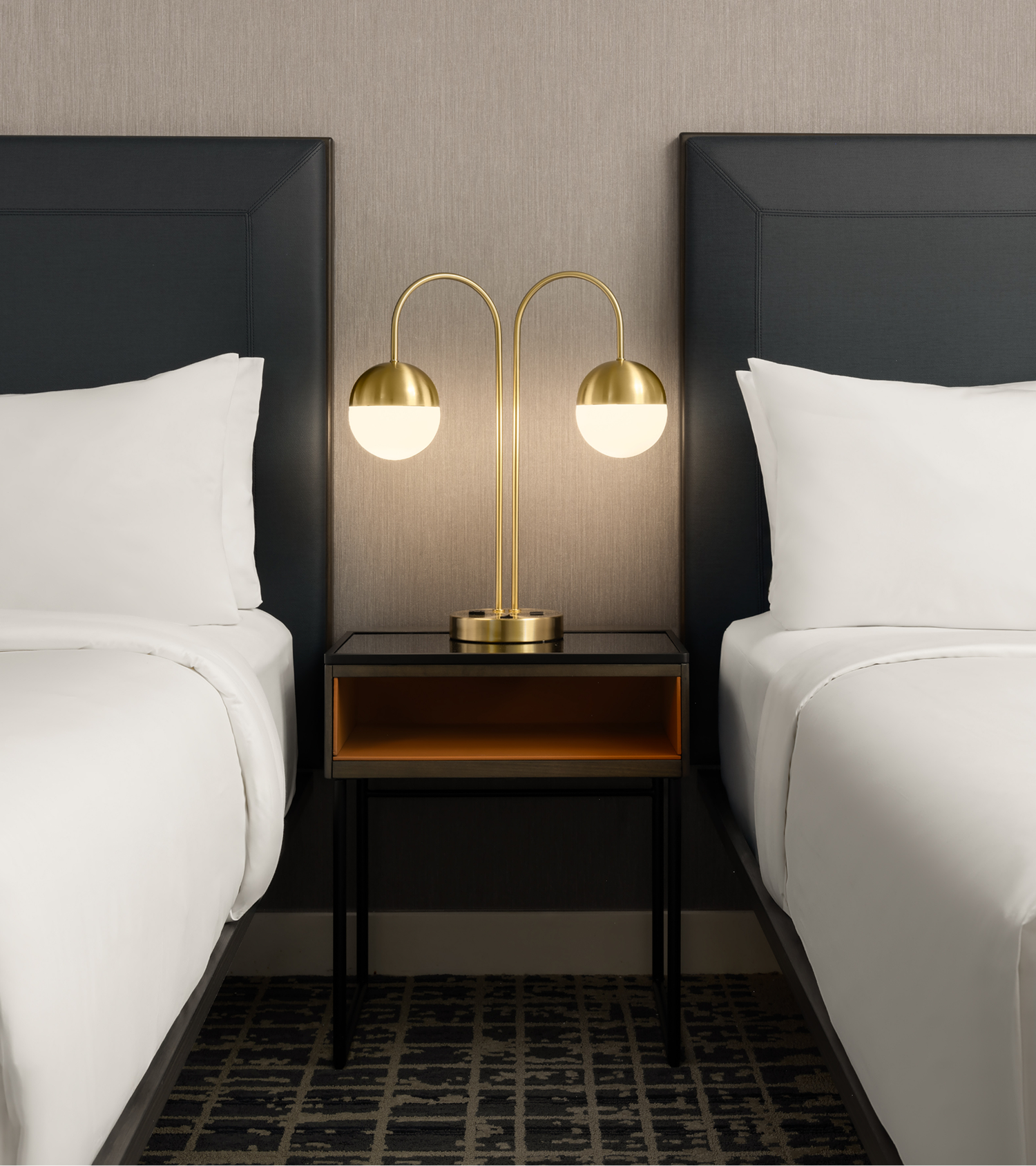
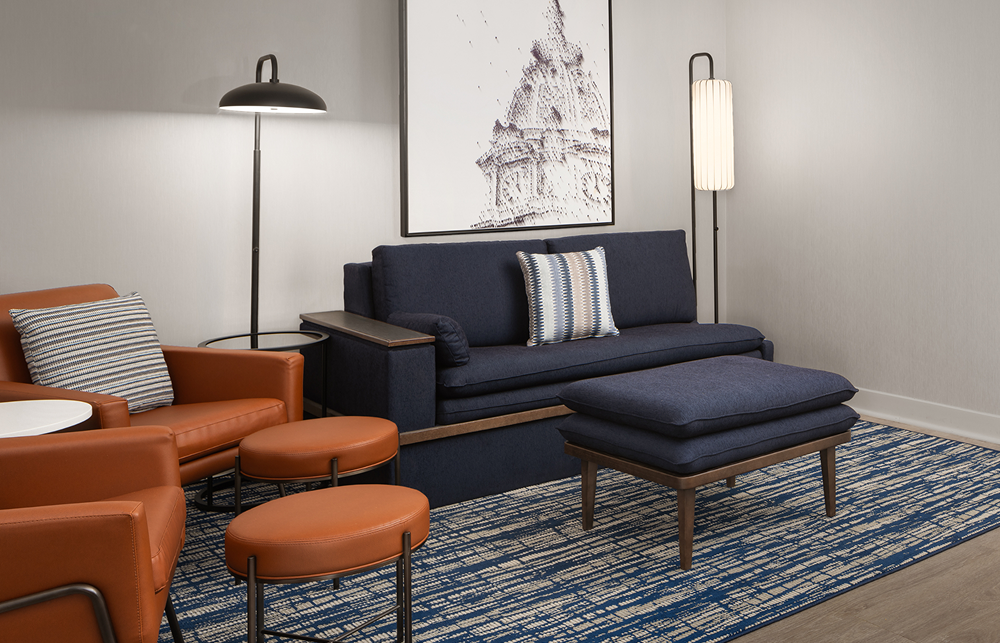
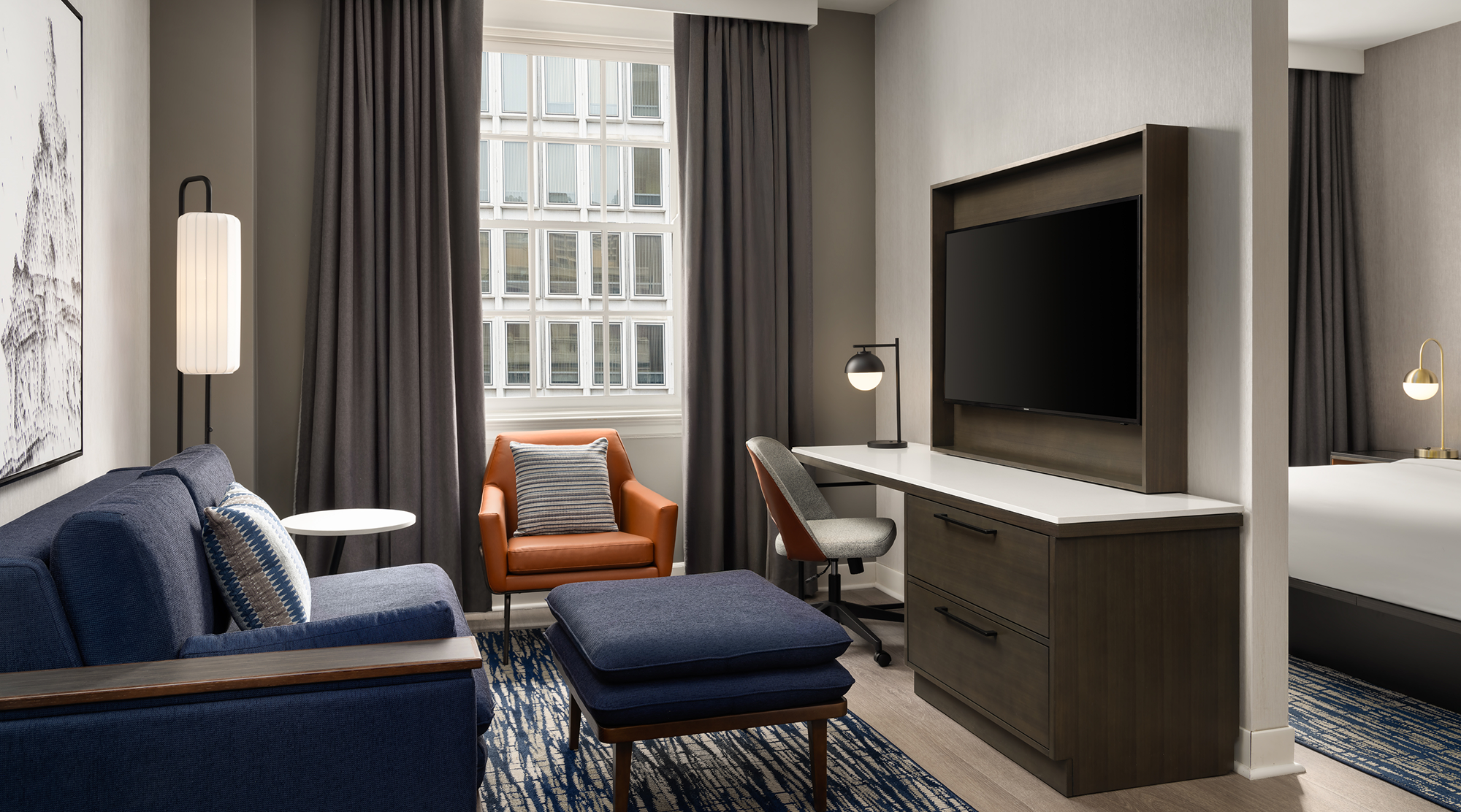
The palette draws from Philadelphia's evening skyline: soft neutrals, deep blue, muted green, warm wood, burnished metal. It carries through from the atrium into the guestrooms and everything in between, with textured walls and rugs adding warmth against all that historic scale.
Preservation With a Purpose
The transformation of Courtyard Philadelphia Downtown demonstrates the role design can play in making adaptive reuse both meaningful and practical.
By preserving the elements that give the building its identity, strategically adapting Courtyard standards, and reprogramming spaces around the needs of today’s guest, the property bridges its institutional past with a new chapter in hospitality.
The result isn't a museum piece, and it isn't a prototype dropped into an old shell. It's something built from both: rooted in Philadelphia, true to the brand, and ready for what's next.
We wanted to preserve the architectural richness that makes the property distinctive, and create an experience that feels timeless, inviting, and distinctly Philadelphia.
Kara Orth Interiors: Prototypical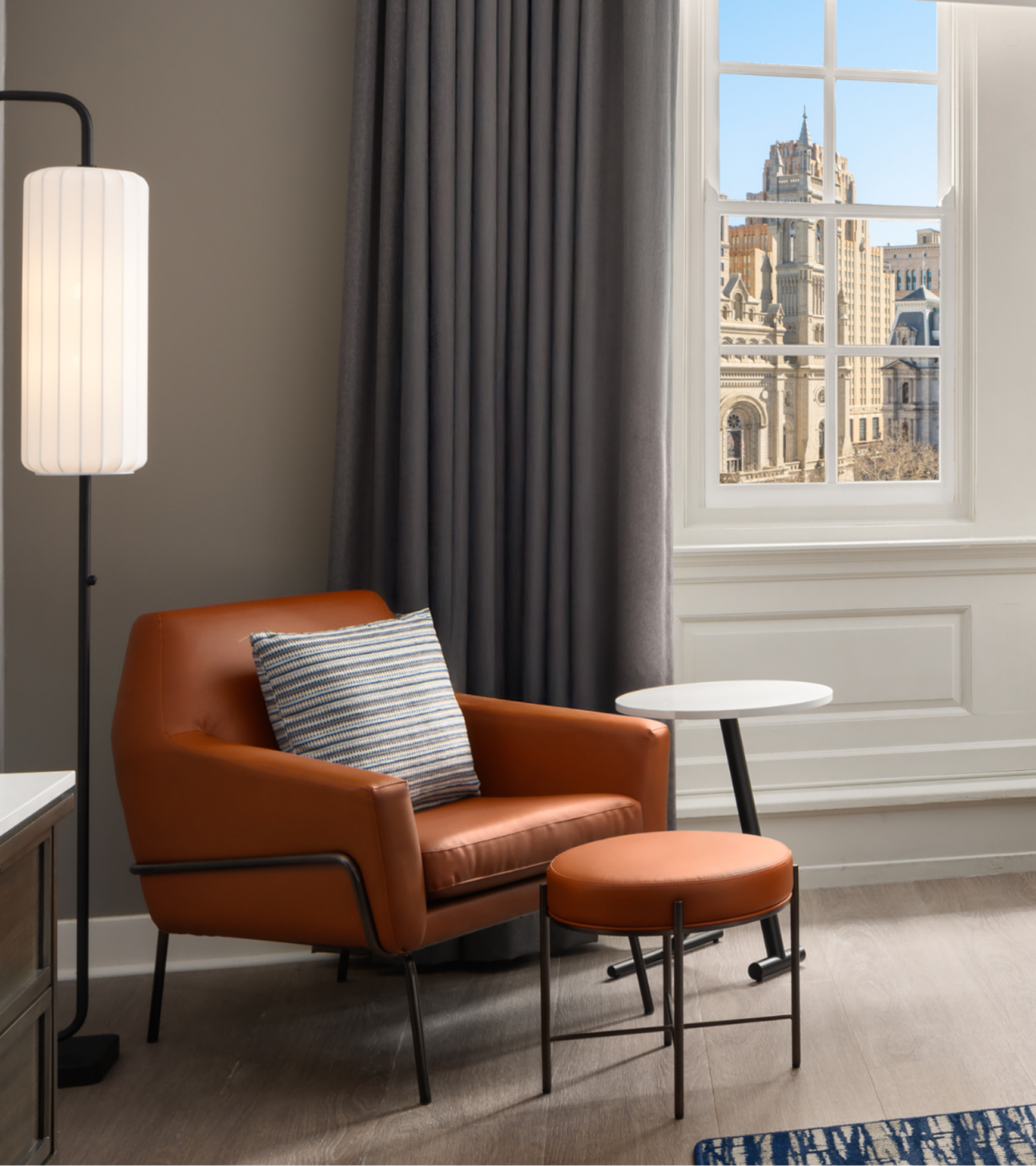
We're proud to be part of the next chapter of this historic space and create a destination where guests can truly feel the hospitality and heartbeat of Center City.
Jen Paro General Manager of Courtyard Philadelphia Downtown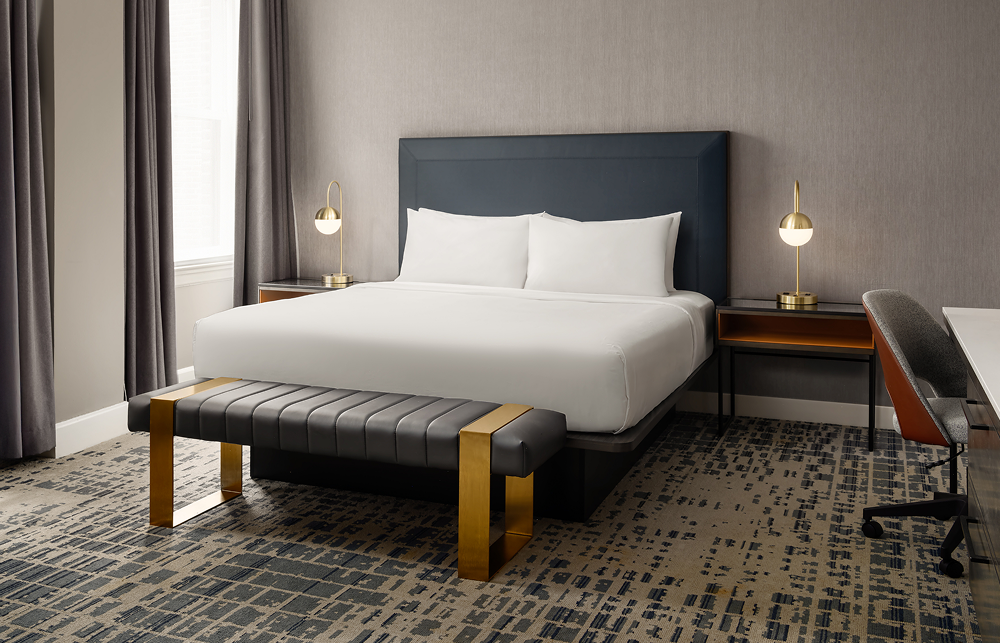
Related Projects
Hyatt Place – Hyatt House Downtown Indianapolis
Indy’s Dual-Branded Property Stays Gameday Ready
View Project