Every Object in Your Hotel Is a Decision. Most Hotels Can’t Remember Making It.
The Keycard test
Walk into almost any hotel and pick up the keycard.
Now ask the team a simple question: why does it look like that?
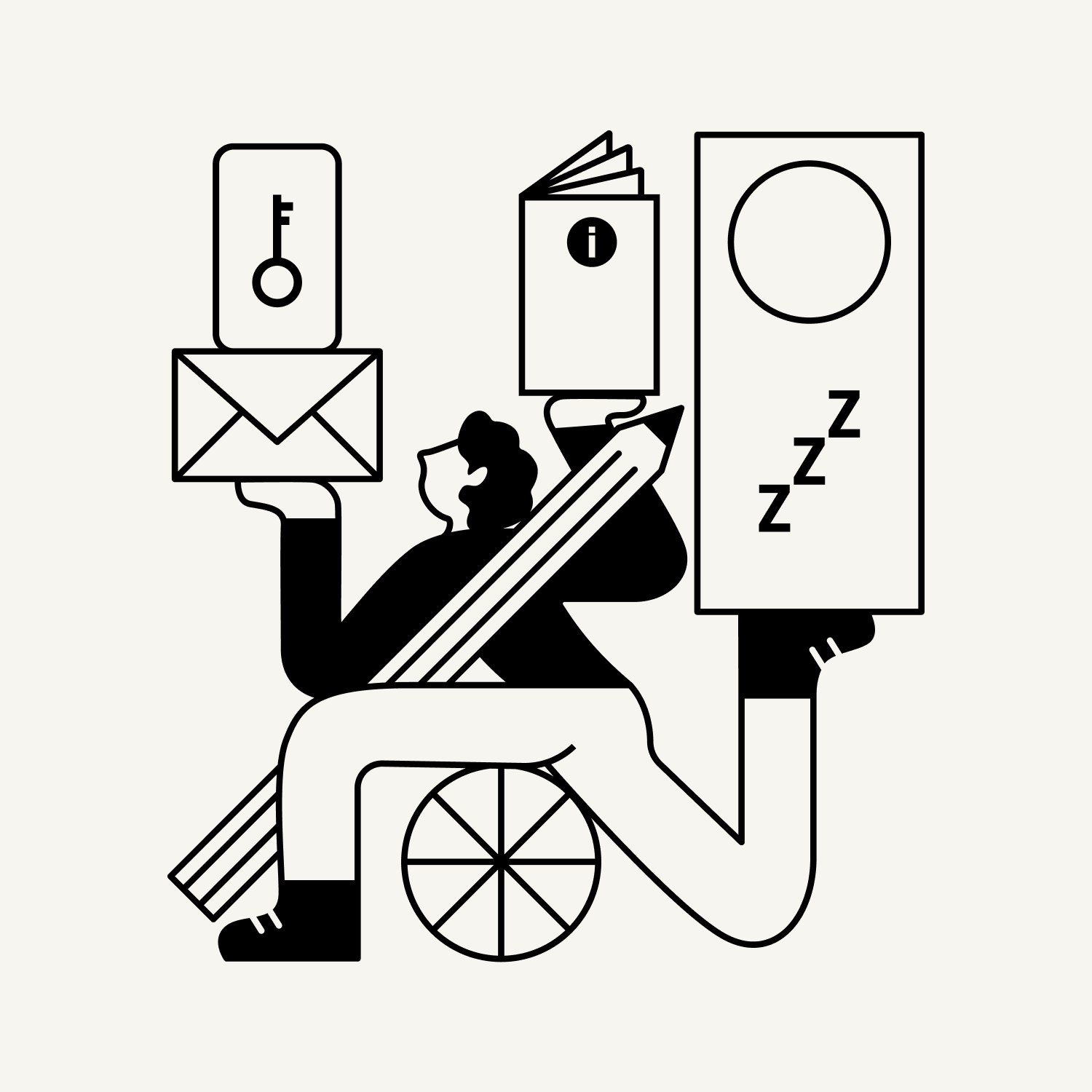
Most can’t answer. Not because they don’t care — because there’s no answer to give. The keycard was a production task. Someone picked a stock template, dropped in a logo, and moved on. Same for the door hanger. The coaster. The note card on the desk.
Here’s the problem with that. Guests don’t experience your brand through your positioning deck. They experience it through the dozen small objects they touch between check-in and checkout. And if those objects can’t be traced back to a decision — a real one, rooted in your story — then your brand exists on paper and nowhere else.
We have a different standard. Every object a guest touches should trace back to a story decision. If you can’t draw the line from the thing in their hand to the idea at the heart of the brand, the thing shouldn’t exist.
Let us show you what that line actually looks like.
The work starts months before anyone designs anything
When we began work on The Midland Hotel, a Tribute Portfolio Hotel in Chicago’s Loop, we didn’t open a design file. We checked into the competition.
We toured the market’s historic hotels and took unglamorous notes. What we found: a market that was dark, glitzy, and gilded. Deco everywhere. Burnham references everywhere.
Then we went into the building’s own history. The property began life in 1929 as The Midland Club, a private club for Chicago’s business elite. Decades later, as a hotel, it earned a nickname: “Chicago’s Friendliest Hotel.”
A private club. The friendliest hotel. A market with no warmth.
That’s not decoration material. That’s a thesis: a modern social club, where everyone’s a member.
The thesis becomes a filter
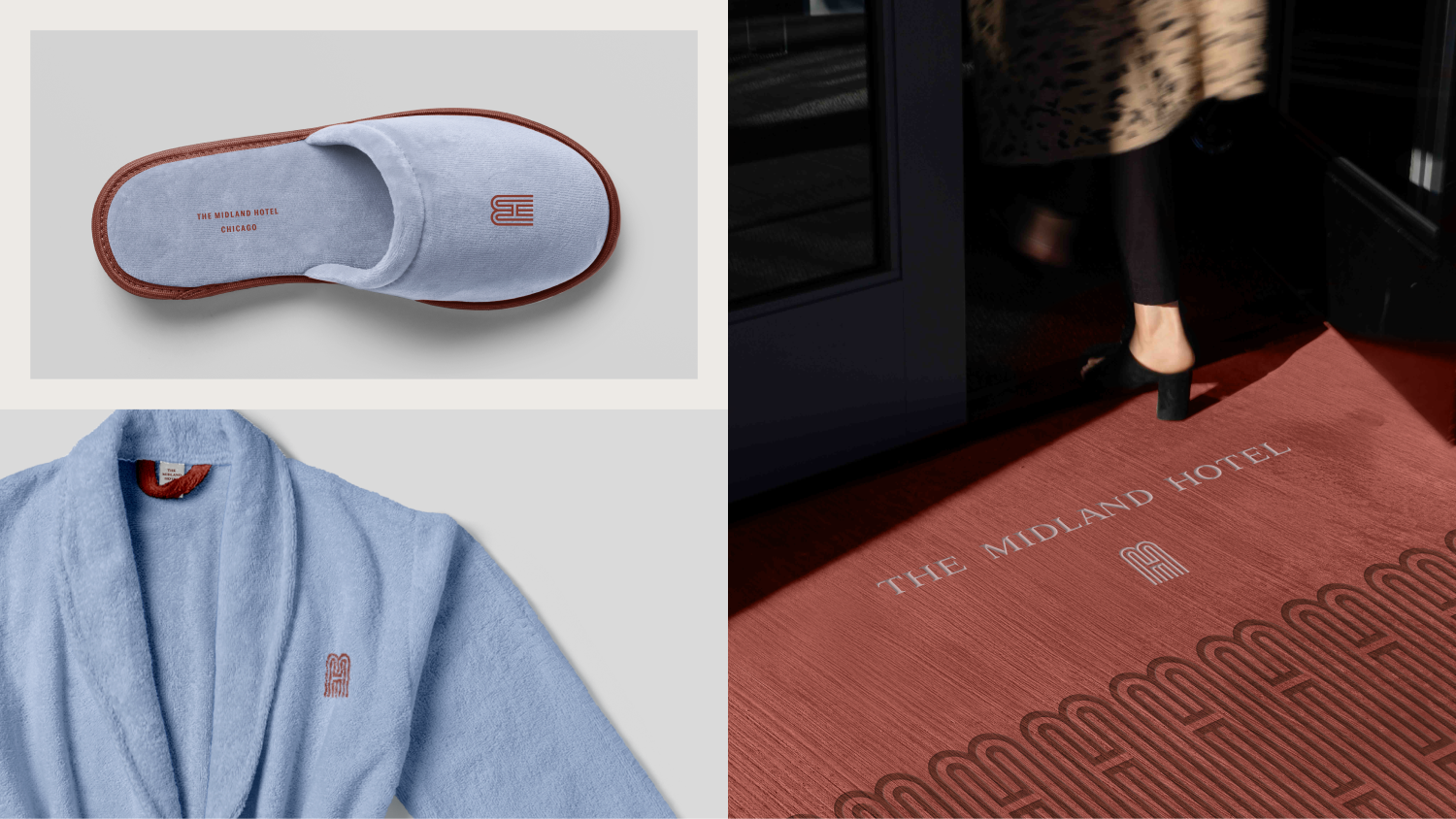
From that thesis came three pillars — Club Comfort, a Modern Classic, Midwestern Hospitality. Pillars sound abstract until you understand what they’re for. They’re not poetry. They’re filters. Every decision that follows passes through them, or it doesn’t happen.
This is the discipline most collateral programs are missing. The industry designs item by item — a keycard here, a tent card there — and ends up with a pile of objects that look fine individually and say nothing together. Guests don’t experience your brand one item at a time. They experience it as a sequence of moments. The only way those moments add up is if every one of them answers to the same idea.
The idea becomes the object
So follow the line all the way down.
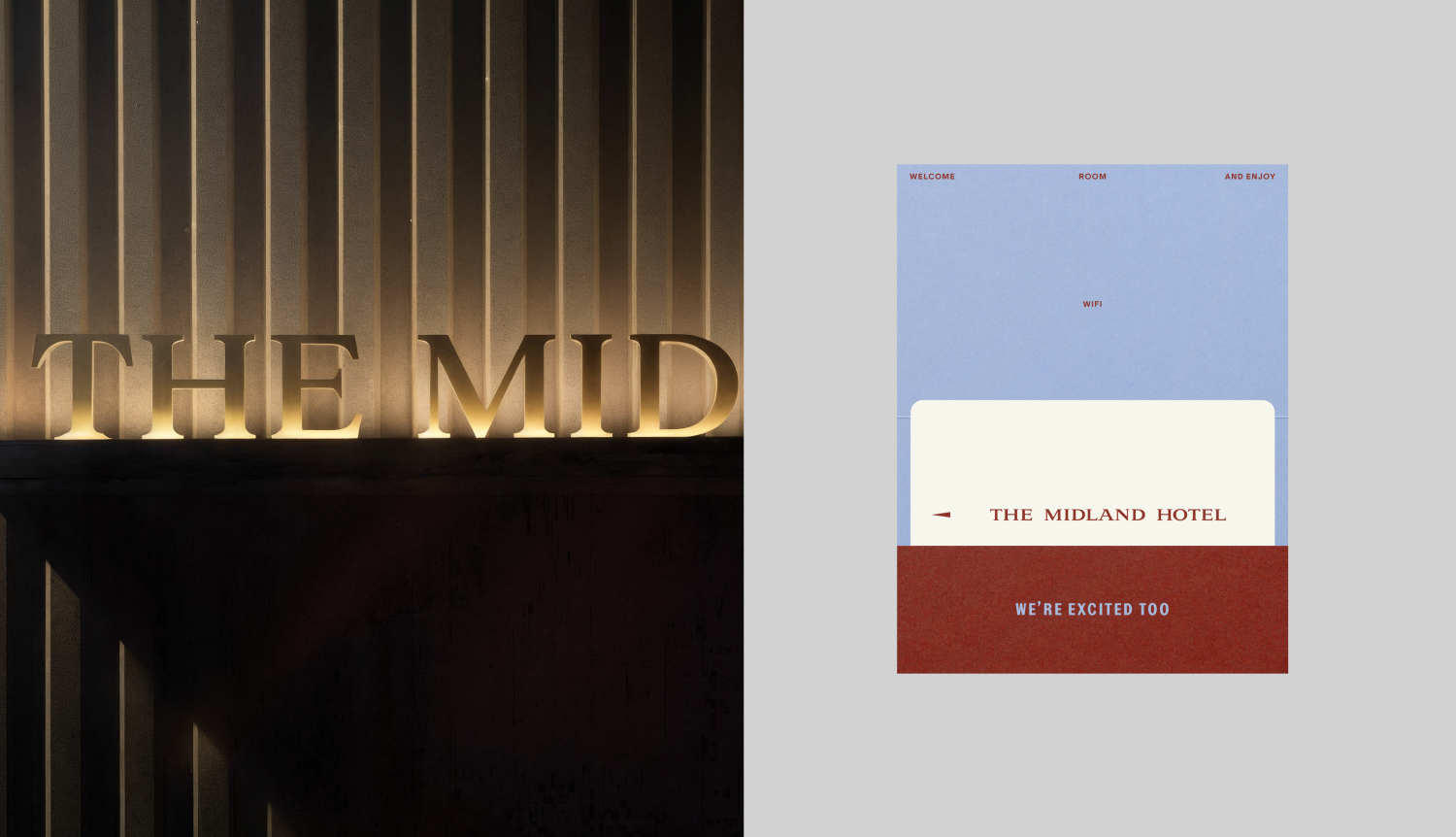
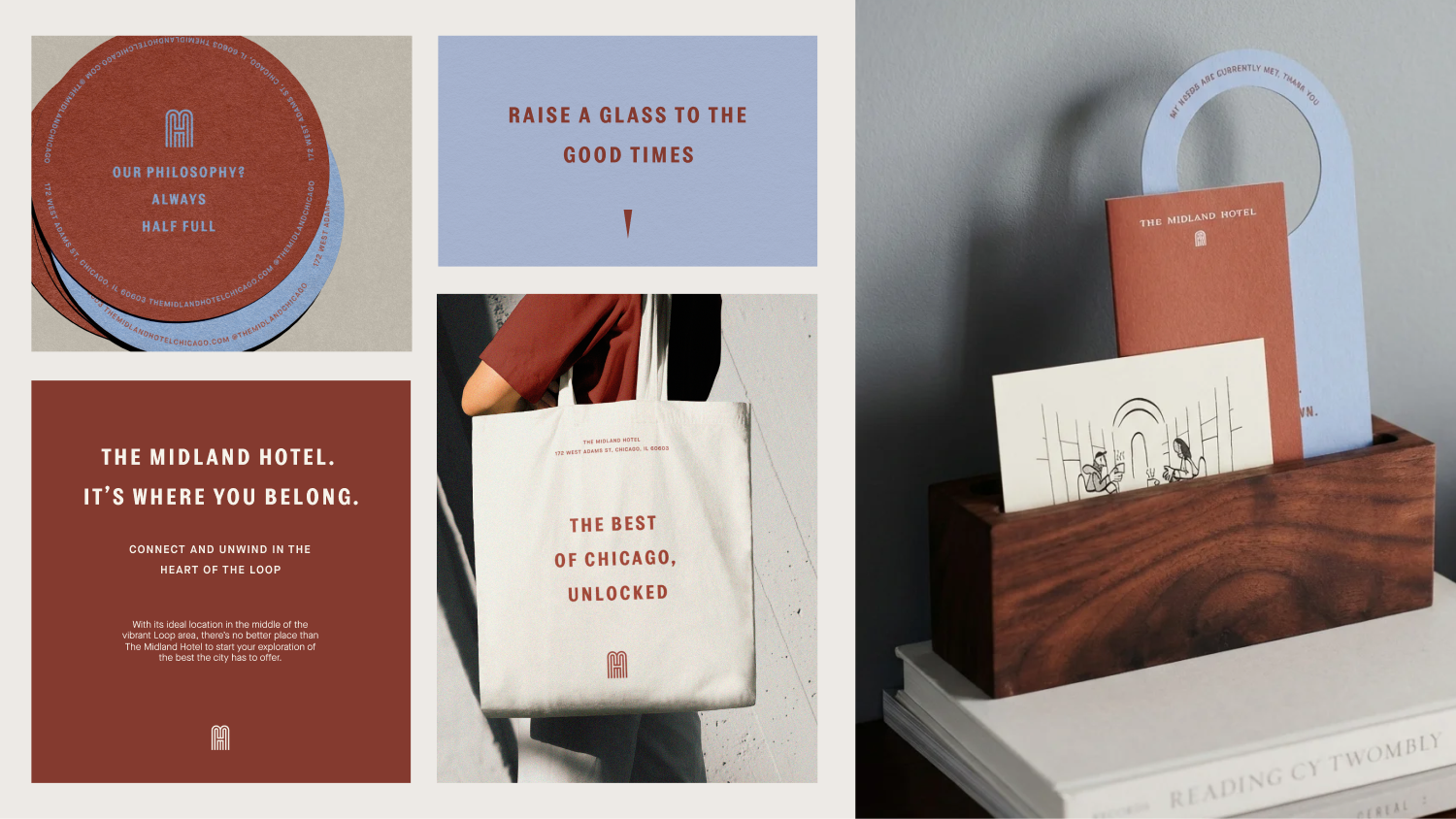
The keycard at The Midland doesn’t just carry a logo. It carries a voice — “Here’s the key to your little corner of Chicago” — with rotating messages on the back, so even the most disposable object in hospitality gets to be friendly. That’s the nickname, made physical.
The coasters in the lounge carry conversation prompts. Because a social club’s job is to start conversations, and a coaster sits exactly where two strangers’ drinks meet.
Even the in-room collateral lives in a wooden box specced with the interior design team, so the desk set belongs to the room instead of sitting on it.
None of these objects is precious on its own. That’s the point. Individually they’re small. Together, they’re the brand — the only part of it a guest can actually experience.
The line can start even earlier
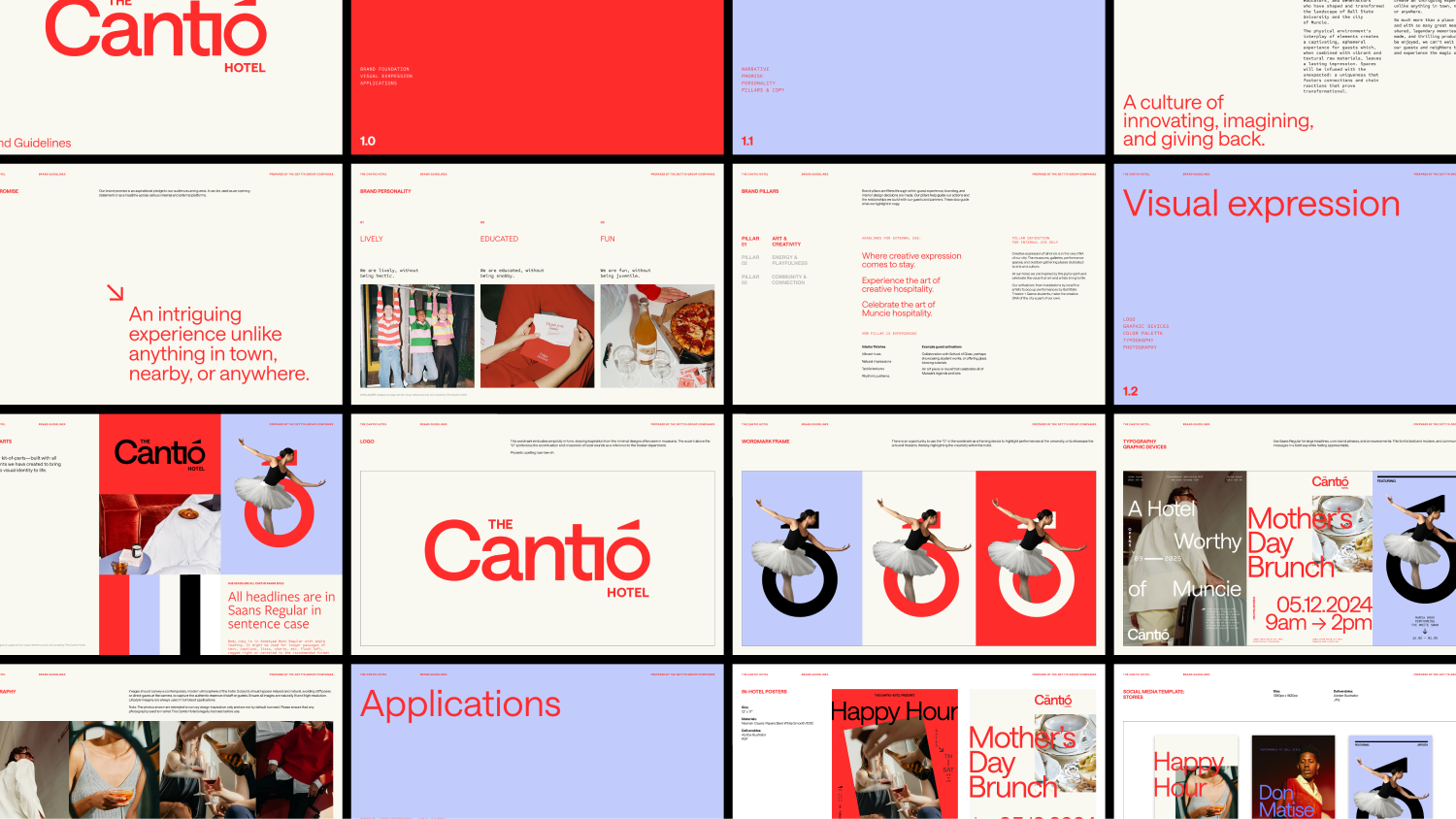
On The Cantio Hotel, a Tapestry Collection — a university-anchored hotel we branded in Indiana — one of the defining collateral ideas appeared in the strategy deck, months before a single layout existed: room keys that tell the stories of the town’s legends. It wasn’t a design flourish added at the end. It was a brand decision made at the beginning, sitting in the same document as the research and the pillars, waiting for its physical form.
That’s what story-first actually means. Not “we wrote a narrative paragraph.” It means the objects were conceived as story before they were produced as things.
Run the test
Here’s where this becomes useful to you, whether you own one property or forty.
Pick up any branded object in your hotel and ask: what decision does this trace back to?
If the answer is a story — a research insight, a piece of history, a pillar — keep it, and invest in it. If the answer is “that’s the template” or “procurement handled it,” you’ve found your biggest opportunity: budget you’re already spending, ready to start saying something.
Hospitality has spent two decades elevating architecture, interiors, and digital. Meanwhile the objects that sit closest to the guest — the ones they hold, flip, sip from, and pocket — get treated as a production afterthought.
That’s backwards. The smallest objects carry the most weight, because they’re the only part of the brand a guest can physically hold.
So: pick up the keycard. If it can’t explain itself, your brand has work to do.