What AI Won’t Change About Hospitality—and What It Will
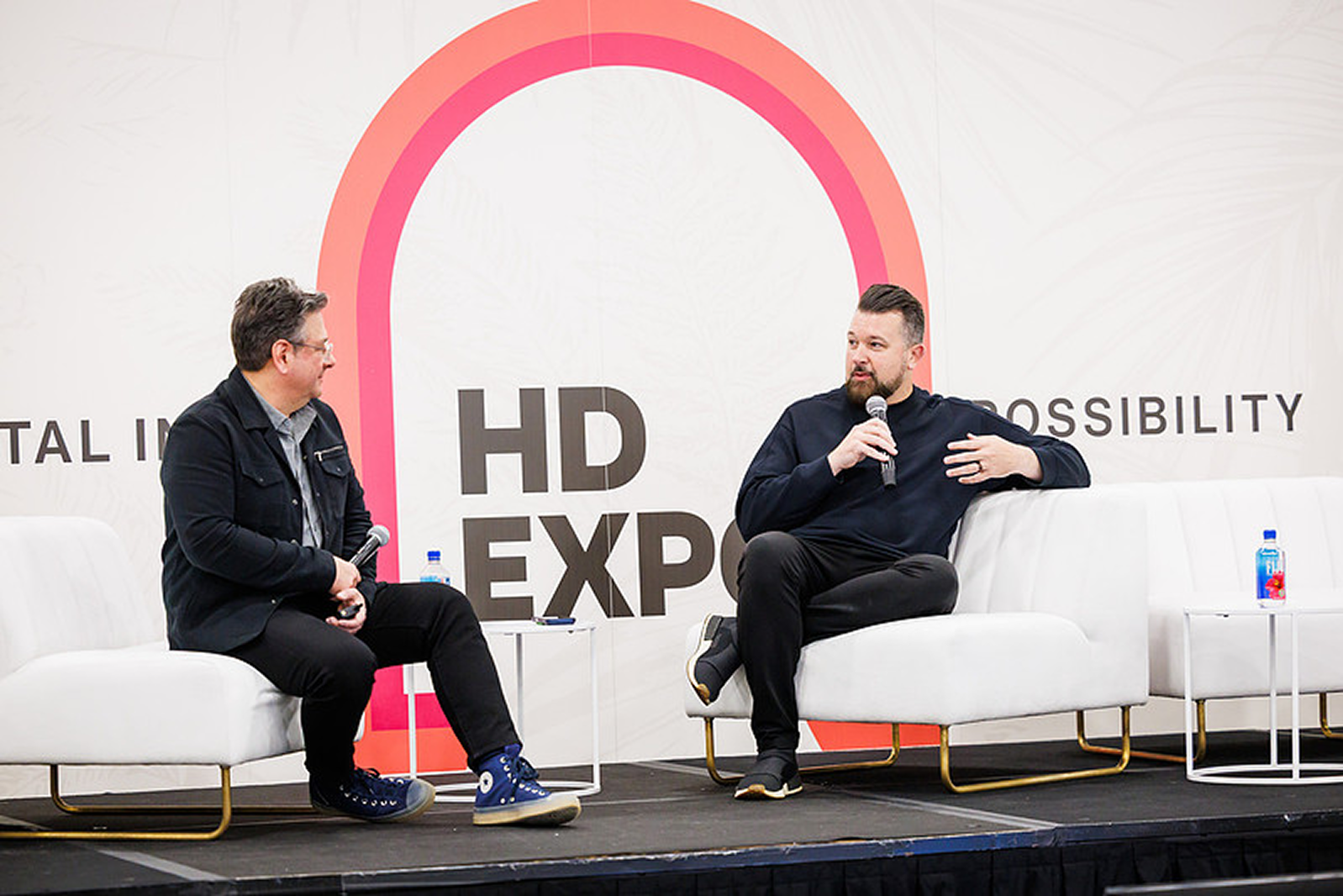
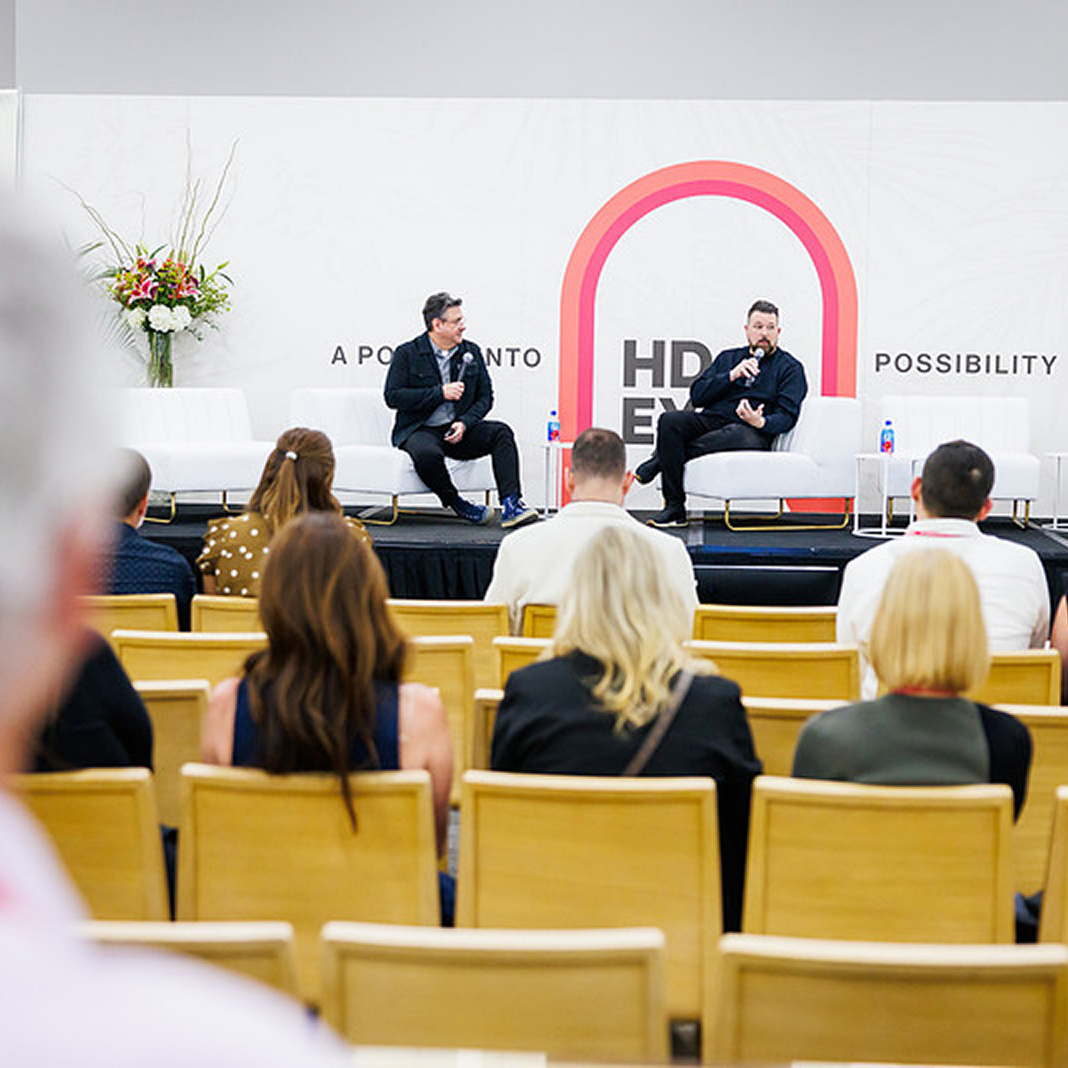
At HD Expo, Chad Reynolds and I asked a question that feels increasingly urgent for hospitality: What if we are missing AI’s most transformative potential?
The industry is already talking about AI constantly. Faster renderings. Smarter workflows. Automated research. New ways to visualize, summarize, and accelerate.
All of that matters. But it may not be the real shift.
The deeper opportunity is not that AI helps us make more things, faster. It is that AI helps us connect decisions earlier, test ideas more intelligently, and reduce the lag between insight and action.
The way we used to work was thoughtful, expert-led, and craft-based. Its weakness was not quality. Its weakness was latency.
A brand concept moved from research to strategy to design to operations to procurement to implementation. Each discipline brought rigor. Each phase had value. But the process was often fragmented. Guest needs were interpreted through static personas. Operational realities surfaced after the idea was already approved. Procurement entered when the concept was emotionally compelling, but not always commercially resolved.
None of this was broken.
But it was slow.
And in a business where owners need returns, operators need efficiency, brands need relevance, and guests change faster than development cycles, latency becomes a strategic problem.
The way we used to work was thoughtful, expert-led, and craft-based. Its weakness was not quality. Its weakness was latency.
Ron Swidler CEOAI as a connective layer
That is why our strategic partnership with Vurvey matters.
Together, Gettys and Vurvey are exploring how AI-powered guest validation can bring the voice of the guest into the process earlier, more often, and with more nuance. Vurvey’s platform allows us to engage simulated guest populations informed by real human insight, helping us test brand, design, and operational ideas before they become expensive decisions.
For Gettys, this is not about outsourcing judgment to AI. It is about giving our teams, our clients, and our collaborators a more intelligent decision environment.
Instead of waiting for a concept to be fully developed before testing it, we can begin to understand how different guest types might respond to an idea in its earliest form. Instead of relying only on static demographic profiles, we can simulate more nuanced behavioral and emotional reactions. Instead of designing in sequence, we can pressure-test tradeoffs in parallel.
That is where the work starts to move from presentation to prototype.
From renderings to experiential prototypes
Renderings help clients see. But seeing is not the same as understanding.
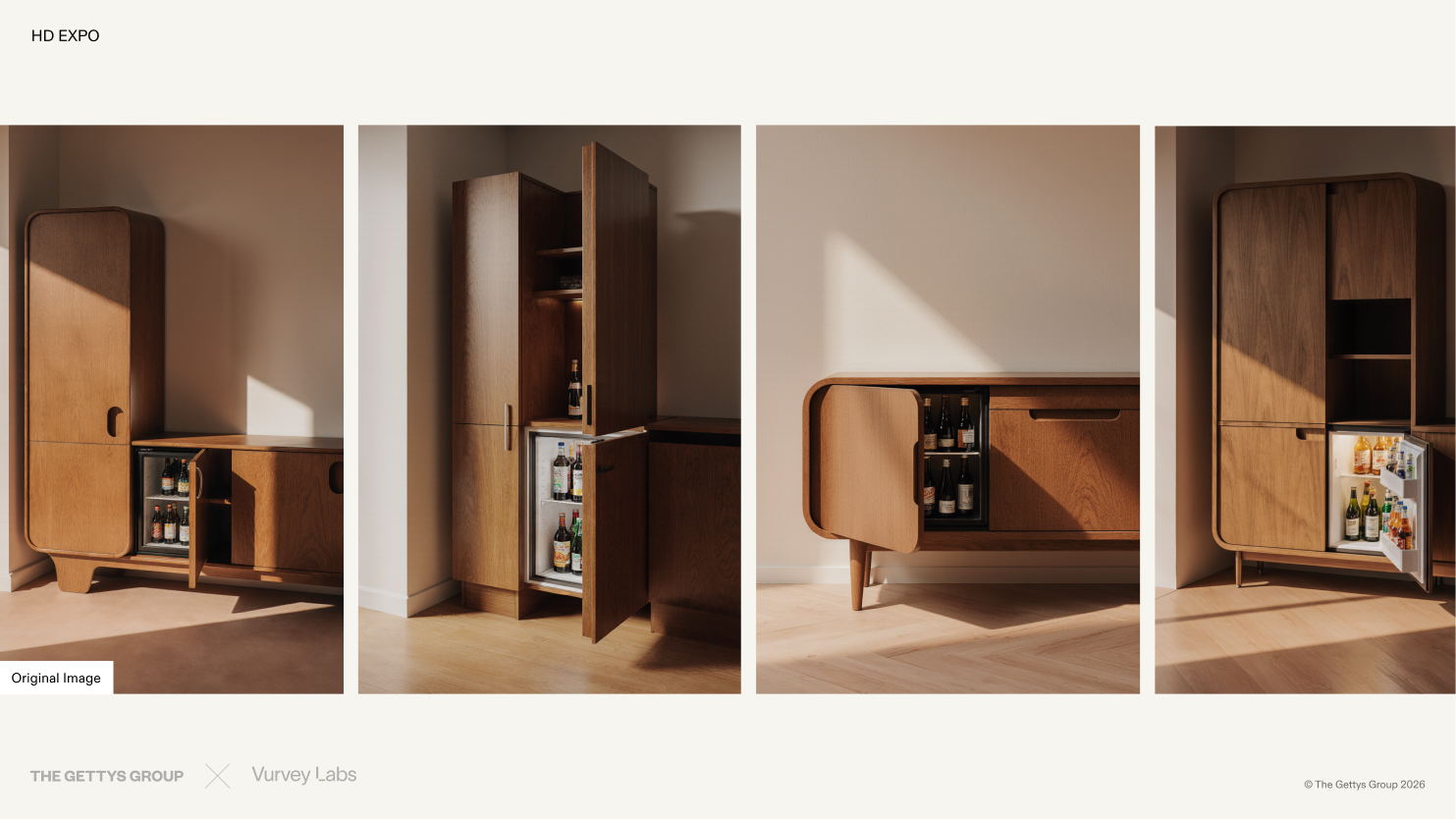
A rendering can show what a space might look like. A simulated environment can begin to show how it might behave.
How does a guest move through the lobby at check-in? Where does energy gather? Where does confusion happen? Does the F&B concept feel intuitive to locals, or only to hotel guests? Does a wellness offering feel accessible, or does it unintentionally feel clinical?
These are not just design questions. They are business questions.
AI-generated imagery, fly-throughs, and digital twins are useful not because they make the process more theatrical, but because they make decision-making more specific. They give teams something to react to earlier. They help reveal the difference between what is visually compelling and what is experientially viable.
AI images are not design. They are conversation accelerators.
The judgment still belongs to the designer. The responsibility still belongs to the team. But the conversation can start sooner, and with more shared context.
From personas to living guest simulations
Hospitality has always depended on empathy. But traditional personas can flatten people.
A “business traveler,” a “wellness guest,” or a “social explorer” can be useful as a starting point. But real guests are more contradictory. They are emotional, practical, aspirational, distracted, loyal, skeptical, and curious—sometimes all in the same trip.
This is where Vurvey’s work becomes especially powerful.
The future is not purely synthetic. Synthetic data is fast and scalable, but it can become sterile. Real human insight remains essential, but it is bound by time, geography, recruitment, and cost.
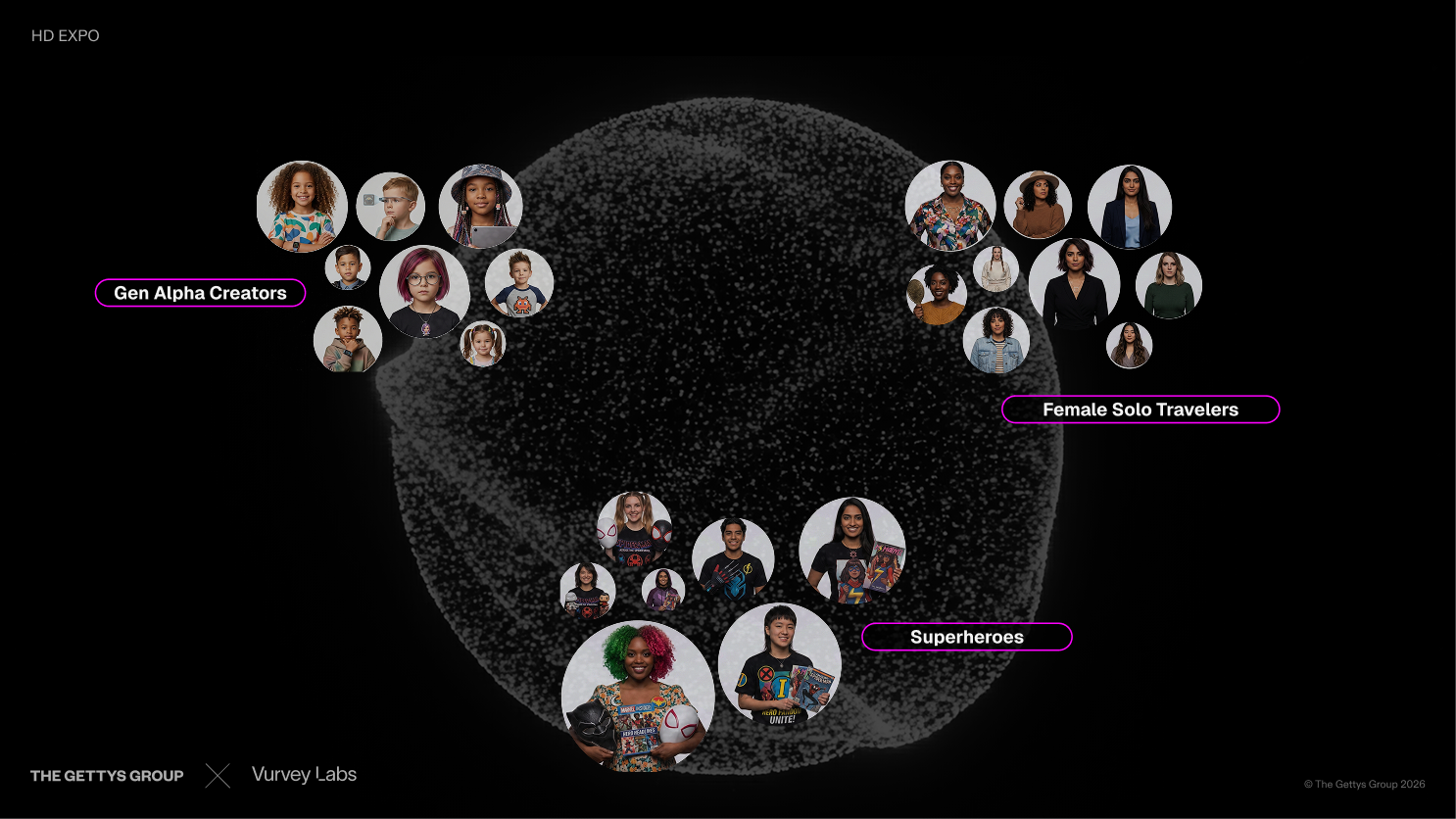
The opportunity is in the “surreal” space: human-AI generated populations that combine real signals with agentic simulation. These populations do not replace research. They extend it.
They allow us to ask sharper questions earlier: Would a female solo traveler read this lobby as welcoming or exposed? Would a Gen Alpha creator see this as worth sharing or not worth noticing? Would a corporate guest understand the wellness offering as valuable or ornamental? Would locals see the restaurant as a destination, or simply as “inside the hotel”?
Those questions used to surface slowly. Now, through our partnership with Vurvey, they can inform the work before the big decisions are locked.
From procurement as execution to procurement as strategy
One of the most important shifts may be how AI changes procurement’s role.
Procurement is often treated as the phase that comes after design: pricing, sourcing, substitution, lead times, coordination, execution.
But procurement is strategy.
It is where vision meets reality. It is where budget, quality, schedule, durability, maintenance, vendor relationships, and guest experience become inseparable.
AI has the potential to bring procurement into the process earlier and more intelligently. Imagine testing not only whether a concept resonates, but whether it can be sourced responsibly, scaled appropriately, maintained operationally, and delivered within the realities of the project.
That is a more honest way to work.
Because the best idea is not the one that looks most compelling in a presentation. It is the one that survives the full journey from concept to guest experience.
What does not change
With all of this change, it is worth naming what remains constant.
Guests still want to feel seen.
Owners still need returns.
Operators still need spaces that work.
Designers still need taste, judgment, restraint, and originality.
Manufacturers still need trust, quality, service, and relationships.
Consultants still need to translate complexity into informed decisions.
Hospitality is still about care.
That last point matters most.
AI can accelerate research. Vurvey can help us validate ideas with greater speed and depth. Together, these tools can expand our field of view, simulate reactions, visualize possibilities, and connect decisions earlier. But they do not care. People do.
The future of hospitality design will not be defined by who uses AI the most. It will be defined by who uses it with the most judgment.
At Gettys, we believe the opportunity is not to make the process less human. It is to make the human work more informed, more connected, and more responsive to the people we are designing for.
AI may change how we test, build, and decide.
But the purpose of the work stays the same: to create places that perform beautifully because they understand the people they serve.