Award-Winning Sustainability at Hotel Verdant
Sustainability is no longer a back-of-house initiative or a final checklist. It is a design driver shaping how hotels are conceived, experienced, and built to endure.
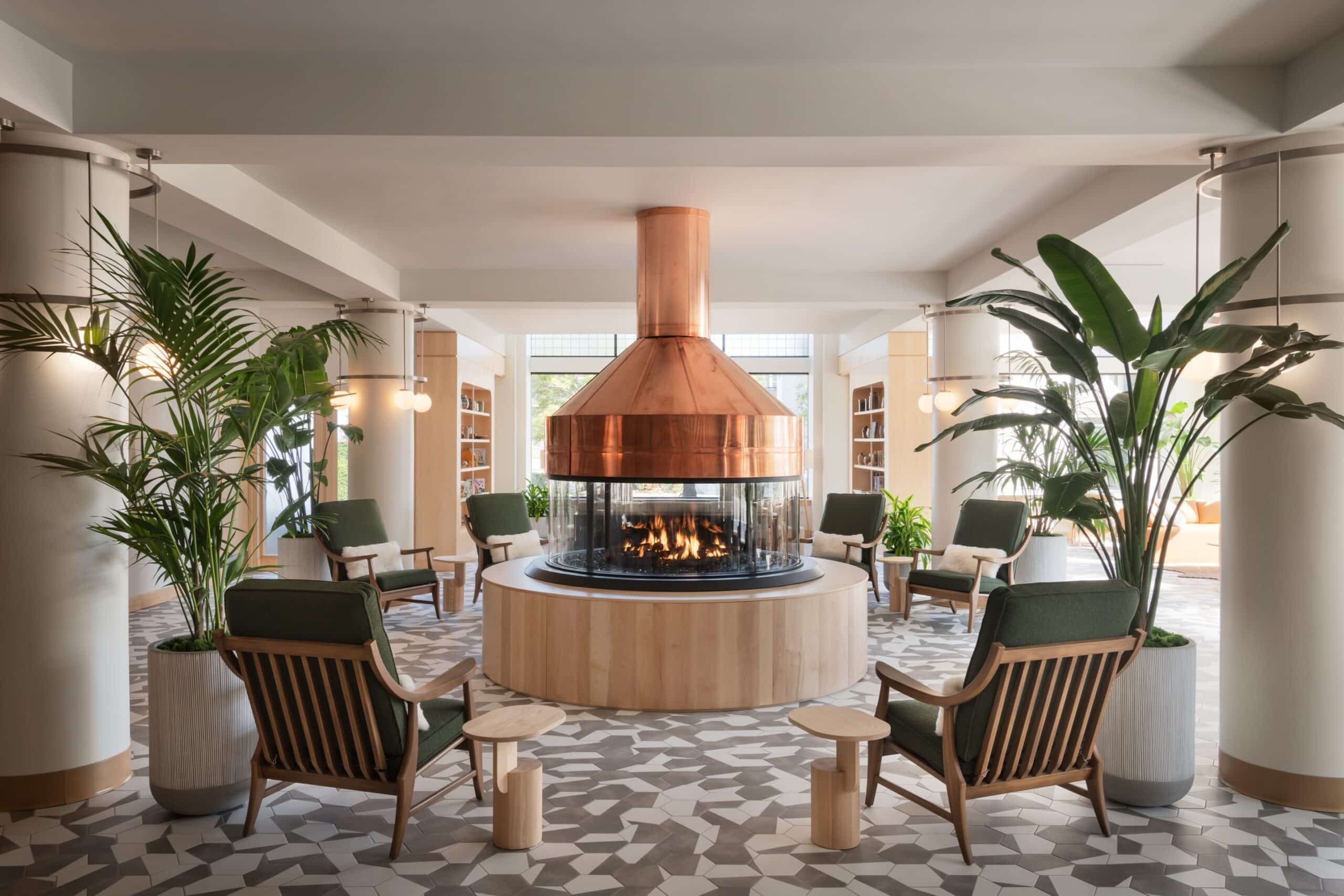
At Hotel Verdant, that shift is both measurable and meaningful. Rooted in Racine’s Danish heritage and its connection to the natural rhythms of Lake Michigan, the design expresses a modern interpretation of hygge—warm, layered, and grounded in nature. Here, sustainability is not separate from the design narrative. It is how the experience is felt.
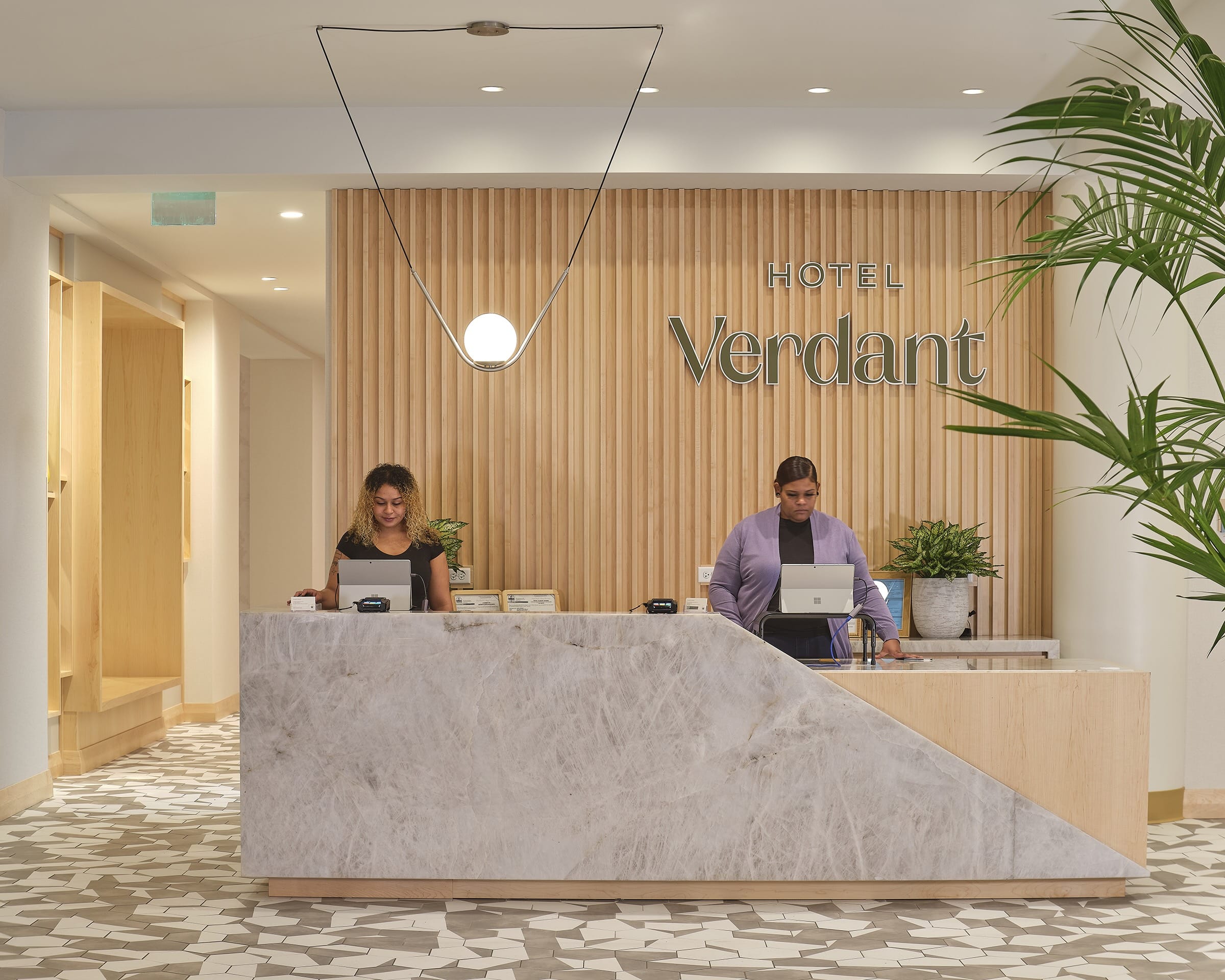
This alignment is reflected in Hotel Verdant’s recognition by the Sustainable Hospitality and Leadership in Design (SHLD) Awards, with wins in both Guestroom and Public Space categories. The project is also LEED Gold–certified, demonstrating that high-performance systems and thoughtful design can work in tandem to support long-term resilience and a more meaningful guest experience.
Regeneration as the Starting Point
Hotel Verdant’s sustainability strategy begins with adaptive reuse.
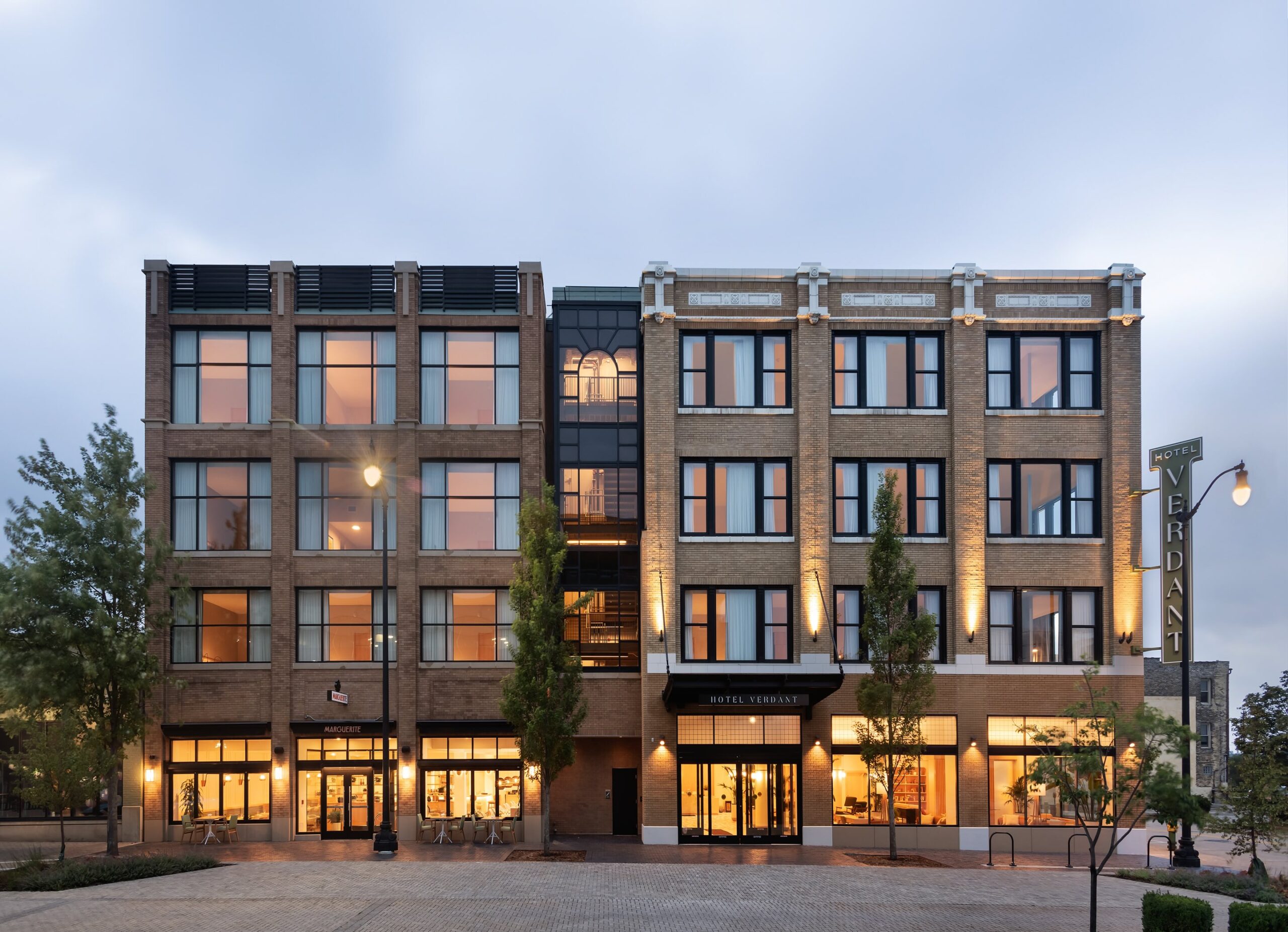
The project revitalized a long-vacant 1925 landmark building, transforming a former department store into a contemporary boutique hotel. Rather than demolishing and rebuilding, the development preserved embodied resources while reactivating a historic structure in downtown Racine.
This approach reduces environmental impact while reinforcing the city’s architectural and cultural fabric. Racine is defined by industry, craftsmanship, and its relationship to Lake Michigan. Reinvesting in an existing building reflects that legacy of reinvention rather than replacement.
For guests, this continuity creates authenticity. The hotel feels connected to its surroundings because it quite literally grew from them.
Sustainability You Can Experience
At Hotel Verdant, sustainability is not abstract—it is embedded in the materials, systems, and spaces guests encounter every day.
More than half of the hotel’s square footage actively contributes to environmental performance, representing 43% of total project spend. These decisions are not hidden. They shape the comfort, quality, and overall experience of the space.
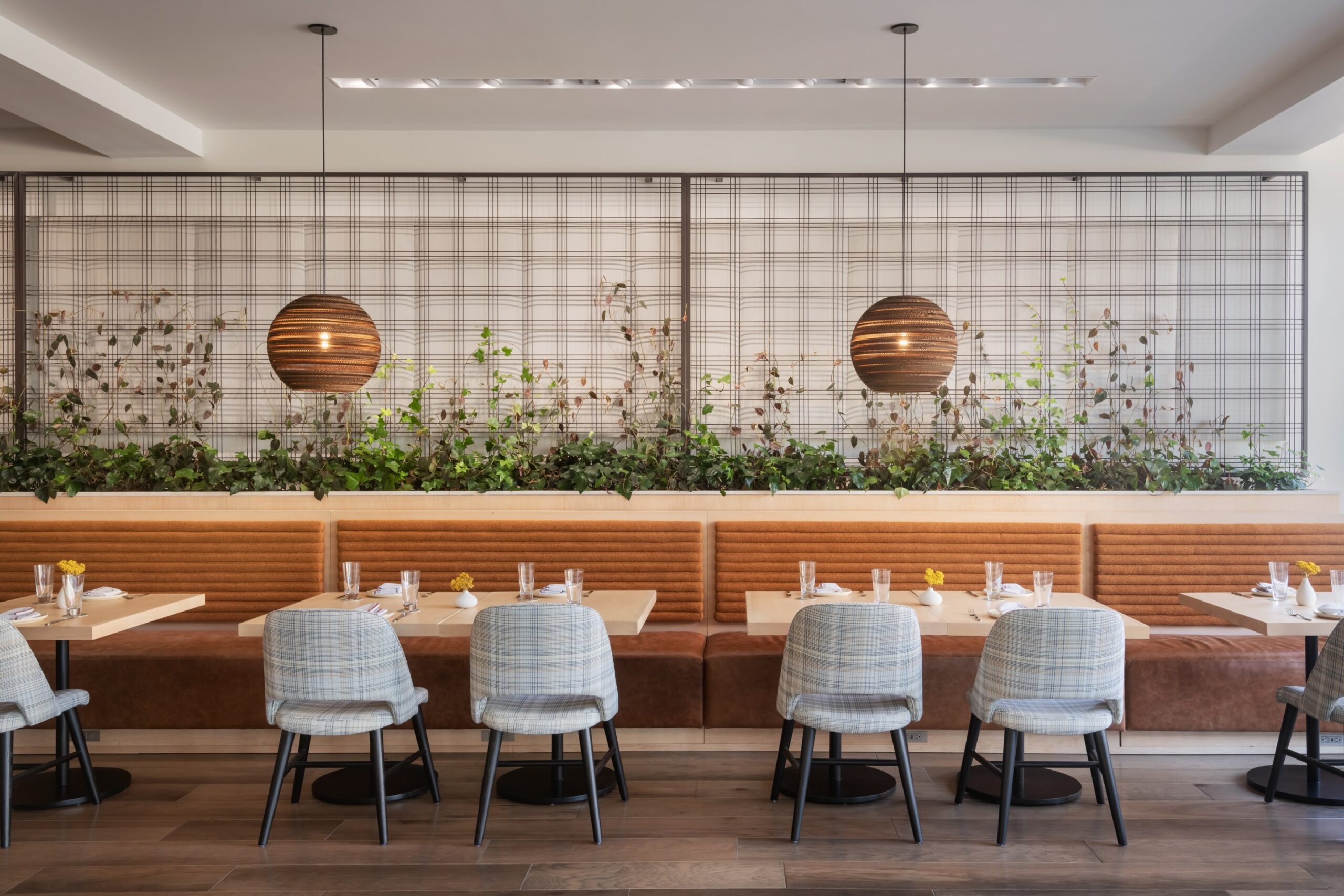
Material selection played a central role. Flooring systems incorporate pre-consumer recycled content and are designed for end-of-life recyclability. Bathroom tile includes recycled material, while upholstery features rapidly renewable wool fibers.
Wallcoverings were selected to meet Berkeley Analytical Tested standards, supporting healthier indoor environments. Window treatments utilize OEKO-TEX certified fabrics, contributing to safer chemical use and improved air quality.
As a result, 43% of materials by square footage are free of VOCs—supporting cleaner air, greater comfort, and a more considered guest environment.
The outcome is sustainability that is not theoretical, but tangible in how the hotel looks, feels, and performs.
Circular Thinking and Responsible Supply Chains
Sustainability at Hotel Verdant extends beyond the building itself to the broader ecosystem of how materials are sourced and produced.
More than 50% of products by square footage contribute to circular material strategies, including recyclable flooring systems and casegoods packaged using fully recyclable materials.
Supply chain transparency was also a key consideration. Several manufacturers involved in the project participate in third-party audits addressing labor practices, including child labor, forced labor, and discrimination. Others are actively reducing carbon emissions in their production processes.
These decisions reinforce that sustainable hospitality is not only about what is installed, but how it is made—embedding responsibility across the full lifecycle of the project.
Connecting Guests to City and Nature
Hotel Verdant’s environmental narrative is inseparable from its location.
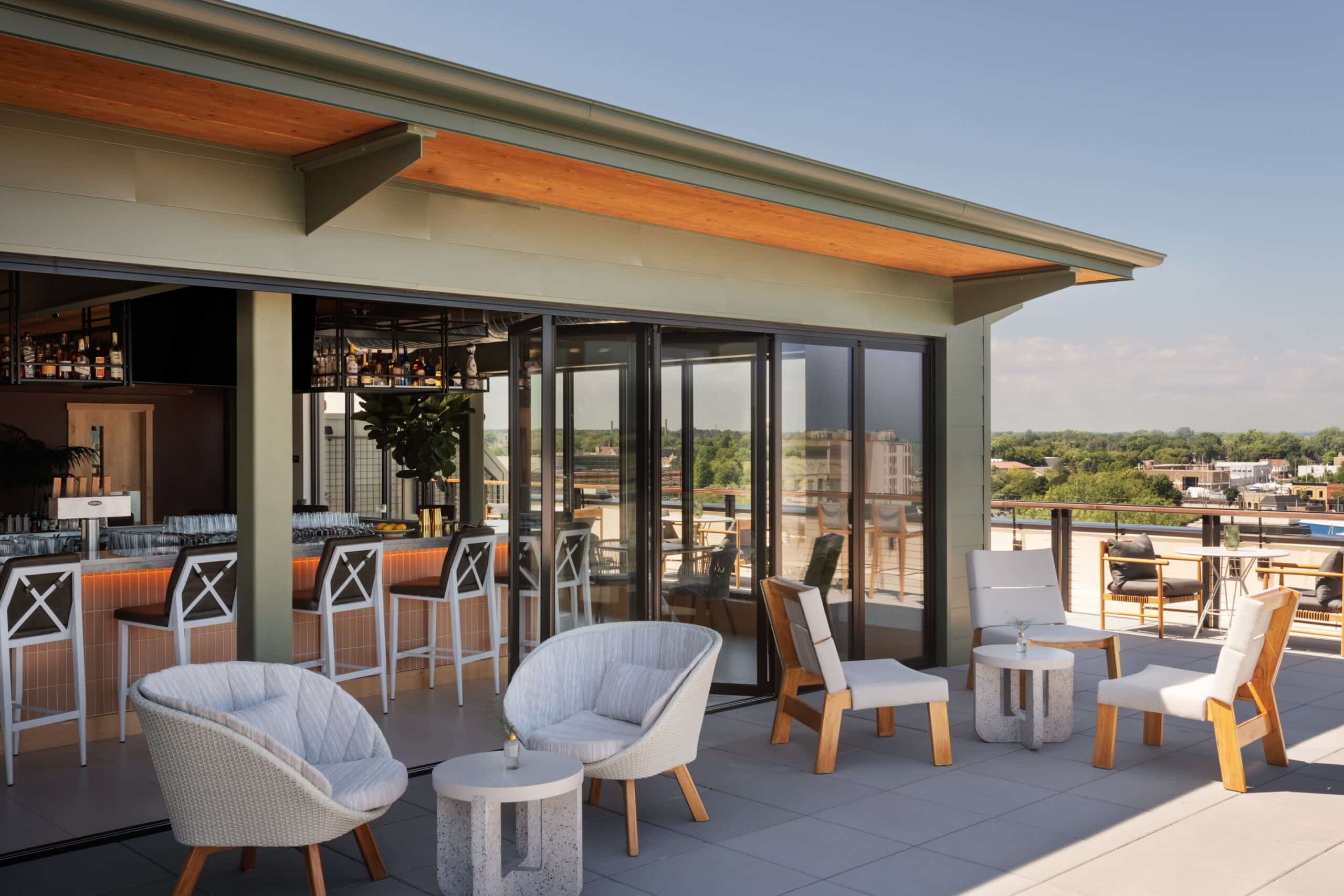
The rooftop restaurant reconnects guests to downtown Racine while opening outward toward Lake Michigan and the surrounding landscape. From this vantage point, visitors experience both the energy of the city and the calm of the lake.
Inside, materials and textures subtly reference the local environment, encouraging guests to slow down and engage with their surroundings. The relationship between city, water, and sky becomes part of the experience.
In this way, sustainability moves beyond performance metrics to shape the emotional quality of the stay.
A Model for Sustainable Hospitality
Hotel Verdant demonstrates that sustainability and design are not competing priorities, but part of a single, integrated vision.
Recognition from the SHLD Awards underscores how environmental responsibility, guest wellbeing, and long-term performance can work together to elevate the overall experience. Every decision supports both how the hotel performs and how it feels.
The future of hospitality will not be defined by how sustainable a building claims to be, but by how deeply that responsibility is embedded in the guest experience.
Hotel Verdant offers a clear model for what that future can look like.